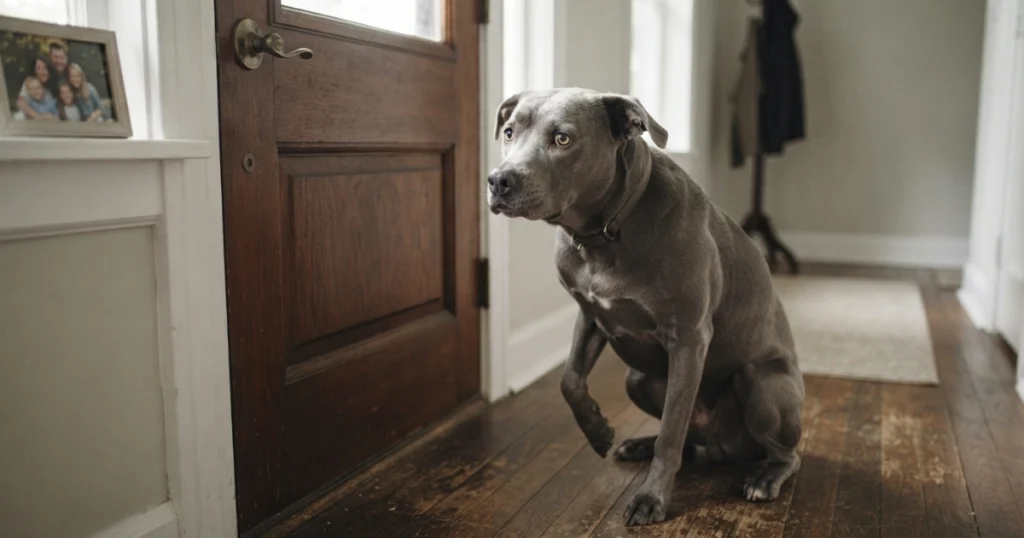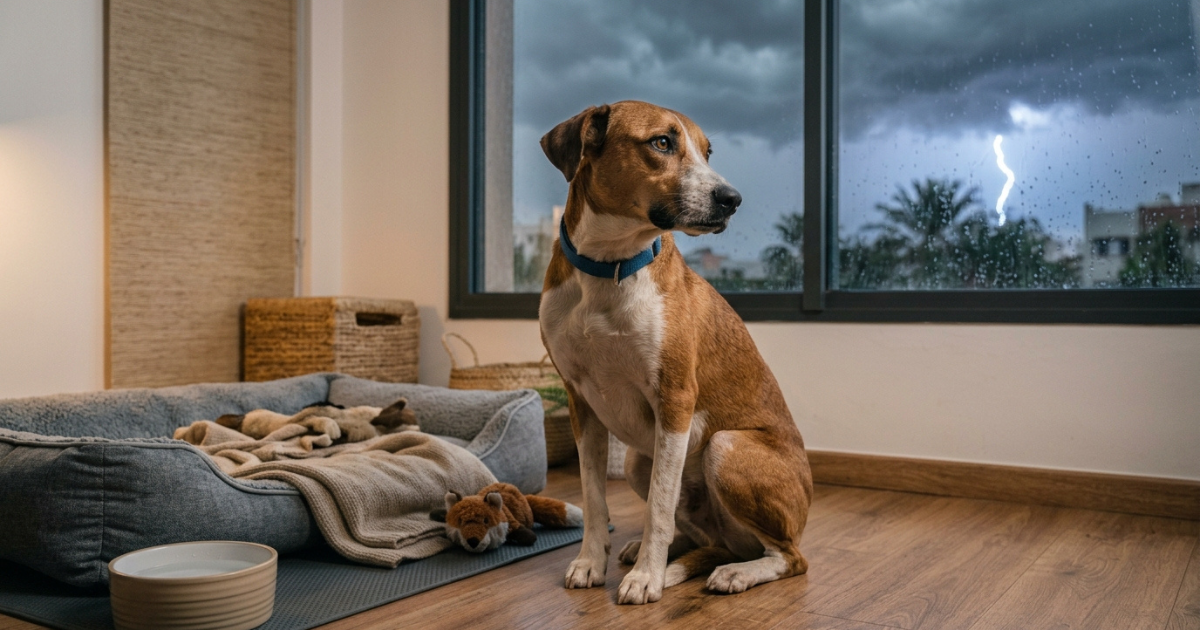
Some dogs start showing signs of fear long before a storm arrives. They pace the house, slip under furniture, or struggle to settle, even when the sky still looks calm. For many owners, storm season becomes a tense routine of trying to soothe a pet who seems scared for reasons that aren’t immediately obvious.
Thunderstorm anxiety in dogs is common — research puts the prevalence anywhere from roughly 25% to 49% of dogs, depending on the population studied. It’s not stubbornness or misbehavior. Dogs have highly sensitive hearing and can pick up distant thunder, shifts in barometric pressure, and even static electricity building in the air well before a storm is visible. These changes can trigger a strong fear response rooted in instinct.
This is one of several fear-based anxiety patterns in dogs. If your dog also struggles with car rides, our guides on travel anxiety causes and signs and proven ways to calm a dog during car rides cover a lot of the same underlying triggers and tools.
Once you recognize what’s happening, it becomes easier to respond in a way that actually helps. The sections ahead break down why storms affect dogs this way, the most common signs to watch for, and practical steps that can make bad weather easier for your dog to handle.
Key Takeaways
- Dogs can often sense thunderstorms before humans notice them.
- Thunderstorm anxiety can range from mild stress to severe panic.
- Creating a safe space and using positive training techniques can help reduce fear.
- Calming products, such as anxiety wraps and pheromone diffusers, may help some dogs.
- Dogs with severe storm anxiety may benefit from guidance and treatment from a veterinarian.
How Thunderstorm Anxiety Affects Dogs
Thunderstorm anxiety begins when a dog perceives changes in its environment as a threat. These changes can trigger an automatic stress response that affects both behavior and physical state.
This response activates the fight-or-flight system, leading to pacing, trembling, panting, or seeking constant comfort from their owner. Because dogs can detect subtle shifts in air pressure, static buildup, and distant sounds, the reaction often starts before the storm is fully noticeable.
Early Warning Signs of Storm Anxiety
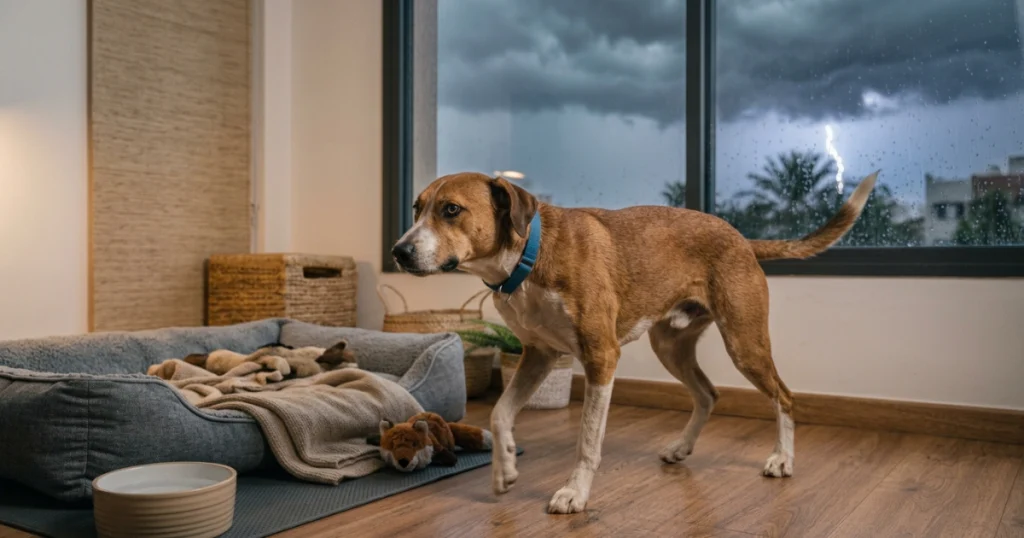
Early signs are often subtle and easy to miss — small changes in behavior that show up well before visible panic sets in. These can include lip licking, yawning, restlessness, and increased alertness. As stress builds, that can progress into whining, pacing, or seeking out hiding spots.
Severity varies from dog to dog. Some show mild signs of stress, while others experience panic that’s genuinely difficult to manage.
| Mild Signs | Moderate Signs | Severe Signs |
|---|---|---|
| Lip licking | Trembling | Escape attempts |
| Yawning | Panting | Destructive behavior |
| Restlessness | Pacing | Excessive drooling |
| Seeking attention | Hiding | Loss of bladder control |
| Increased alertness | Whining | Refusing food or water |
⚠️ When these signs appear repeatedly or escalate quickly during storms, the anxiety may require structured management or veterinary guidance.
Why Thunderstorms Trigger Fear in Dogs
1. Loud and unpredictable sounds. Dogs hear far more acutely than humans, so thunder can feel especially intense and sudden. The irregular timing and booming noise can easily overwhelm a sensitive dog.
2. Changes in atmospheric pressure. Many dogs detect drops in barometric pressure before a storm arrives, creating unease even before any thunder is heard.
3. Static electricity. Storm conditions can build up static in a dog’s coat, sometimes causing mild shocks or tingling that adds to the anxiety.
4. Past experiences and genetics. A bad storm experience early in life can leave a lasting fear response, and some dogs are simply more anxious by temperament to begin with. According to Today’s Veterinary Practice, herding breeds in particular tend to show a higher rate of noise-related phobias.
Physical and Emotional Effects of Storm Anxiety
Thunderstorm anxiety isn’t just a passing scare — during a storm, a dog’s body genuinely shifts into a stress state that affects it physically and emotionally:
- Increased heart rate and breathing — the fight-or-flight response speeds up both as the body prepares to respond to perceived danger
- Elevated stress hormones — cortisol and adrenaline stay high, making it harder for a dog to settle even after the storm starts to pass
- Behavioral and emotional changes — pacing, trembling, hiding, or clinginess are common, and some dogs become less responsive to commands as their focus narrows to finding safety
- Appetite and routine disruption — stress can dampen interest in food, treats, or normal activity until the anxiety eases
- Risk of injury in severe cases — some dogs try to escape confined spaces at peak anxiety, which can lead to self-injury
Frequent or severe storms can compound this over time — repeated stress exposure without proper management may intensify future anxiety responses rather than the dog simply “getting used to it.”
Quick Solutions for Different Levels of Thunderstorm Anxiety
| Anxiety Level | Recommended Action |
|---|---|
| Mild | Create a safe space and use white noise to reduce storm sounds |
| Moderate | Add calming aids such as anxiety wraps, pheromone products, and enrichment activities |
| Severe | Work with your veterinarian on a behavior modification plan and possible medical support |
Ways to Help Your Dog Stay Calm During a Storm
Helping a dog with thunderstorm anxiety works best when preparation happens before storm season begins. Dogs learn through repetition and association, so calm-weather practice builds coping skills that are much harder to establish once fear has already taken hold.
Create a Predictable Safe Space
Dogs naturally seek out enclosed, quiet areas when they feel threatened — it’s an instinct that helps them feel protected when things get overwhelming.
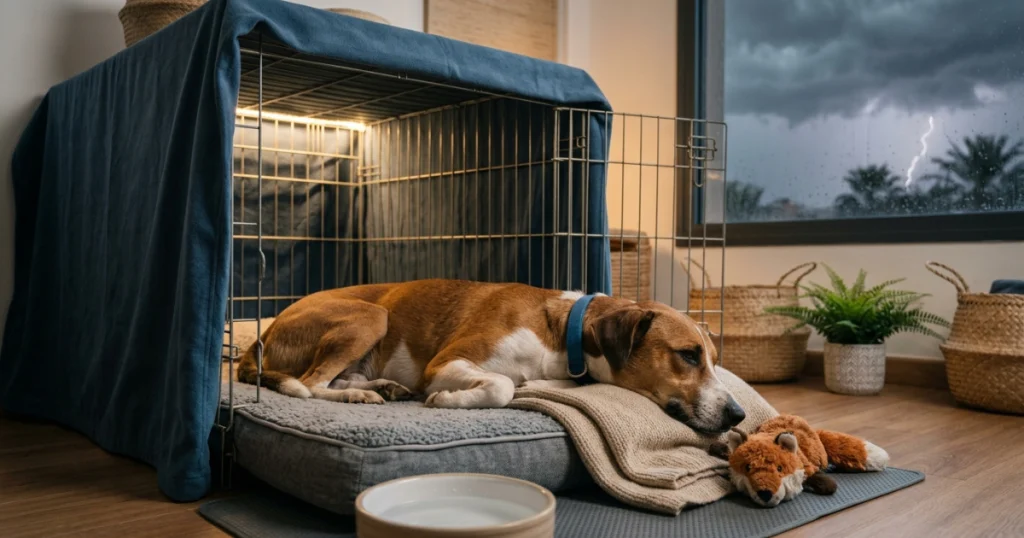
Pick a consistent spot: a bathroom, laundry room, basement, or a covered crate your dog already likes. The goal is to cut down on thunder noise and lightning flashes while giving your dog somewhere reliable to retreat to.
A few ways to make that space feel secure:
- A familiar blanket or item carrying your scent, for extra reassurance
- Chew toys or stuffed enrichment items to redirect stress into natural soothing behavior
- Closed blinds or curtains to cut down on lightning flashes, which often ramp up arousal
- White noise or a fan to soften sudden changes in sound
Introduce the space during calm moments, too — feeding meals or relaxing there together helps your dog build a positive association with it, rather than linking it only to storms.
Keep Your Own Behavior Steady and Predictable
Dogs read human behavior closely during stressful events, and sudden shifts in your tone or attention can unintentionally signal that something’s wrong.
Stick to your normal routine and avoid overreacting to the storm yourself. Speak normally, and let your dog come to you for comfort rather than forcing interaction. If they seek closeness, calmly acknowledging them is fine — the goal isn’t to ignore the fear, just to signal that things are still safe. Avoid punishing fearful behavior or over-dramatizing reassurance; both tend to increase anxiety rather than ease it.
Use Calming Tools Strategically
Calming aids can support your dog’s nervous system, but they work best as part of a broader plan rather than a standalone fix:
- Compression garments (anxiety wraps) apply gentle, consistent pressure that can reduce physiological arousal in some dogs
- Dog Appeasing Pheromone (DAP) products mimic natural calming signals — the same category covered in more depth in our guide to calming products for dogs
- White noise machines soften the contrast between thunder and background sound, making sudden noise less jarring
Effectiveness varies by dog, so pairing a couple of tools based on how your dog actually responds tends to work better than relying on just one.
Redirect Focus with Structured Enrichment
During a storm, a controlled, rewarding activity can shift your dog’s attention away from the noise outside. Licking and chewing naturally activate self-soothing mechanisms, which is why these tend to work well:
- Stuffed KONG toys that require sustained licking and chewing
- Lick mats with safe spreads to promote repetitive, calming behavior
- Puzzle feeders that engage problem-solving under low pressure
Build Confidence Before Storms Arrive
Long-term improvement comes from teaching your dog that storm sounds aren’t inherently dangerous. While your dog is relaxed, try:
- Playing distant thunder recordings at very low volume during meals or play
- Rewarding calm behavior in their safe space
- Gradually increasing volume over time, staying below the threshold that triggers distress
- Keeping daily routines predictable to lower baseline anxiety
This gradual exposure approach retrains the emotional response instead of just masking the symptoms in the moment.
Watch Early Stress Signals and Adjust Early
Catching the subtle early signs — pacing, panting, restlessness, hiding, reduced interest in food — gives you the chance to step in before anxiety escalates. If your dog keeps escalating despite these strategies, it’s worth reassessing the plan with your veterinarian; more severe cases may need structured behavior modification or medical support to keep the anxiety from intensifying over time.
Common Mistakes Owners Make During Thunderstorms
Punishing fearful behavior. Fear isn’t misbehavior. Punishing a dog during a storm tends to raise anxiety and make future storms even harder on them.
Forcing your dog outside. A frightened dog may refuse to go out during a storm — pushing the issue usually makes the fear and discomfort worse.
Waiting until the storm starts. Preparing beforehand is almost always more effective than reacting once your dog is already anxious. Having a safe space and calming tools ready ahead of time makes a real difference.
Leaving your dog alone. Most dogs with storm anxiety feel safer with a trusted person nearby. Being alone can intensify the fear and increase pacing, whining, or hiding.
When Professional Help May Be Needed
If your dog’s thunderstorm anxiety is severe or isn’t improving with training and calming aids, it’s time to loop in your veterinarian. Professional treatment can reduce fear, improve quality of life, and help prevent the anxiety from getting worse over time.
Discuss Medical Treatment Options
The medications below are prescription-only and mentioned here for informational purposes — they should only be used under direct veterinary guidance, which can determine the right choice, dosage, and timing for your individual dog.
Where anxiety significantly affects comfort or safety, a veterinarian may recommend medication as part of a broader treatment plan:
- Short-acting medications such as trazodone, gabapentin, or clonidine, typically given before or during a storm to reduce acute fear and panic
- Long-term medications such as fluoxetine or sertraline, used to help regulate baseline anxiety in dogs with ongoing, generalized stress
Medication tends to work best combined with behavior modification and environmental management, rather than used on its own.
Behavioral Support and Training Plans
Your veterinarian may also recommend a structured behavior modification plan to change your dog’s emotional response to storms over time. This often includes desensitization — introducing low-level thunder sounds gradually so your dog becomes less reactive — along with counter-conditioning, which pairs storm-related sounds with high-value rewards to build a more positive association. Relaxation training can round this out, teaching your dog a calm, settled behavior they can lean on during stressful moments.
Together, these methods aim to reshape how your dog responds to storm triggers at the source, rather than just managing symptoms in the moment.
Conclusion
Thunderstorm anxiety can feel overwhelming to watch, but many dogs become noticeably more comfortable during storms once they have the right support and a predictable sense of safety. Small changes — a secure retreat, positive associations built ahead of time, a calm response from you — add up over time. Some dogs improve with simple environmental changes, while others need a combination of training, management, and veterinary support.
If the fear stays intense or starts affecting your dog’s daily well-being, a veterinarian can help you explore further options. The sooner you start preparing for storm season, the easier it tends to be for your dog to face future storms with more confidence and less stress.
FAQ
Can dogs sense thunderstorms before they happen? Yes. Many dogs pick up on thunderstorms before humans do, sensing changes in air pressure, humidity, static electricity, and distant sounds well before a storm arrives.
Why is my dog shaking during a thunderstorm? Shaking or trembling is a common sign of thunderstorm anxiety — part of the body’s natural stress response, often alongside panting, pacing, and hiding.
Should I comfort my dog during a thunderstorm? Yes. Calm reassurance can help your dog feel more secure. Speak softly, stay relaxed, and let your dog stay close if they want to. Avoid punishment, since it tends to worsen the fear.
How can I calm my dog during a thunderstorm? Provide a safe, quiet space, use white noise or calming music, and offer favorite toys or treats. Anxiety wraps, pheromone products, and calming supplements may help too. For severe anxiety, talk to your veterinarian.
Can thunderstorm anxiety in dogs be cured? There’s no guaranteed cure, but many dogs improve significantly with behavior training, gradual desensitization, environmental management, and — in some cases — veterinarian-prescribed medication.
Can puppies develop thunderstorm anxiety? Yes. Early experiences with loud thunder and lightning can shape how puppies react to storms later on, so positive exposure and training early can help reduce fear down the line.
Sources: Today’s Veterinary Practice — Noise and Storm Phobias in Dogs, PetMD — Thunderstorm Phobia in Dogs, ScienceDirect — Factors Influencing the Development of Canine Fear of Thunder