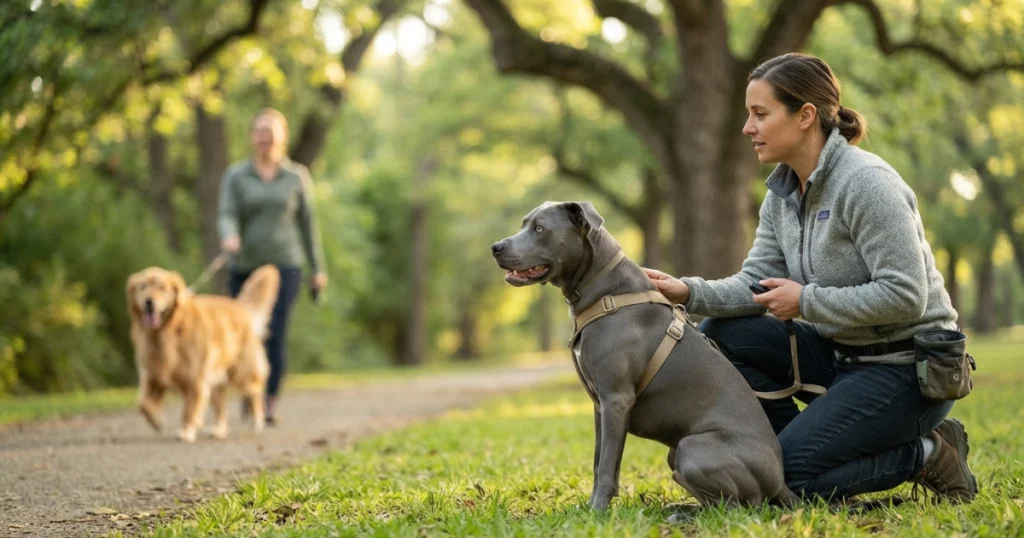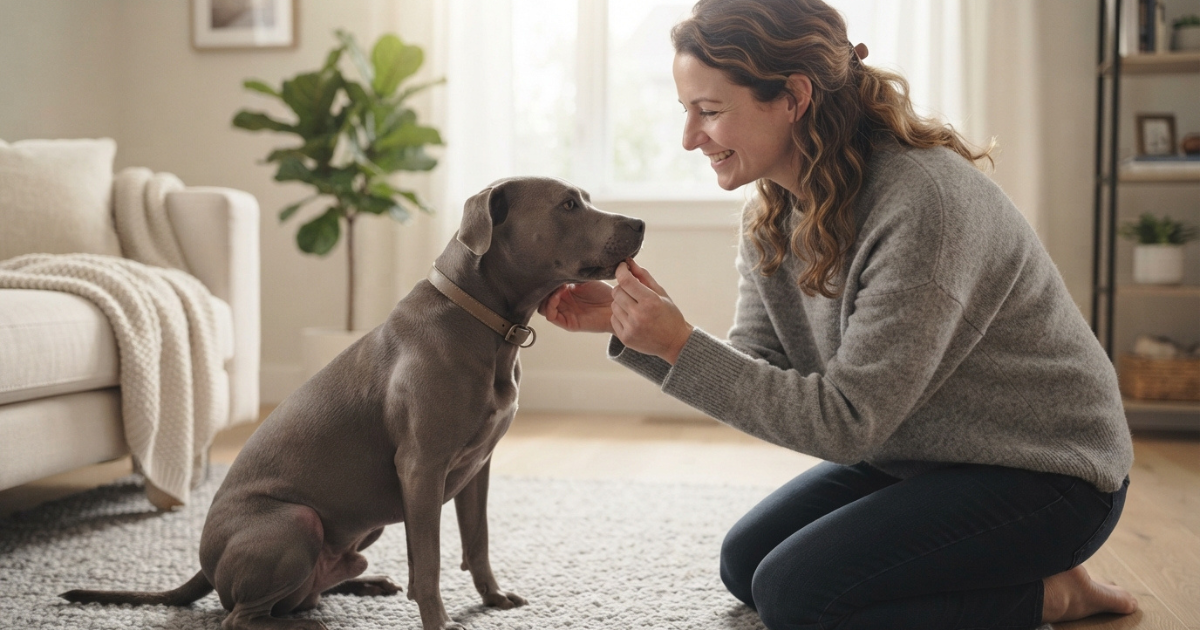
Dog anxiety is not a behavior problem — it’s an emotional response to fear, stress, or uncertainty. Many dogs experience anxiety when left alone, exposed to loud noises, or faced with unfamiliar situations.
Unlike punishment-based methods, positive reinforcement training focuses on changing how dogs feel about anxiety triggers. By rewarding calm behavior and building positive emotional associations, dogs can gradually become more confident and less fearful. This is the technique underneath nearly every specific guide on this site — this article is the deep dive into the method itself: how to mark behavior, time rewards, and build training sessions that actually change how your dog feels.
Key Takeaways
- Positive reinforcement builds confidence by rewarding calm behavior instead of punishing fear.
- Reward-based training creates positive associations with situations a dog used to find stressful.
- Desensitization and counter-conditioning teach a dog that a scary situation now predicts something good.
- Consistency — same commands, same timing, same rewards, from everyone in the household — matters more than any single technique.
- Severe anxiety cases may still need a veterinarian or certified behaviorist alongside training.
What Is Dog Anxiety?
Dog anxiety is a fear-based stress response to specific situations, people, sounds, or environmental changes. Occasional nervousness is normal; persistent anxiety affects a dog’s emotional well-being, behavior, and quality of life.
Anxiety generally shows up in a few forms: situational (trigger-based, like fireworks), chronic (ongoing emotional stress), and learned (shaped by a past negative experience). Knowing which one you’re dealing with matters, because positive reinforcement works best when it’s tailored to the actual cause.
Common causes include separation from an owner, loud noises, environmental change (moving, travel), poor early socialization, past trauma, and disrupted routines. These often show up first as subtle signs of stress that are easy to miss before they escalate — and when the trigger is specifically time alone, it usually points to separation anxiety rather than general nervousness.
Why Positive Reinforcement Works for Dog Anxiety
Positive reinforcement dog training works because anxious dogs need more than obedience — they need to feel safe and secure. Rewarding calm behavior builds a positive emotional association with whatever used to cause fear. Over time, the trigger itself starts to predict something good instead of something threatening.
This is also what the research supports: the American Veterinary Society of Animal Behavior specifically recommends reward-based methods like desensitization and counter-conditioning over punishment or correction-based training for treating fear and anxiety, noting that aversive methods risk increasing stress and worsening the underlying problem — even when they appear to stop a behavior in the short term.
Benefits of positive reinforcement:
- Builds trust between you and your dog
- Creates positive emotional associations with former triggers
- Encourages calm behavior in stressful situations
- Improves confidence and emotional well-being over time
Creating a Safe and Calm Environment for Your Dog
A calm, predictable environment makes reward-based training more effective — dogs learn better and relax faster when they already feel safe.
A good retreat space includes:
- Comfortable bedding and familiar toys
- Protection from loud noises and household traffic
- Soft lighting and a generally calm atmosphere
Encourage your dog to use the space voluntarily, and reward them for choosing to relax there — that reinforces the association over time.
Calming aids and crate training: Tools like pheromone diffusers and anxiety wraps can reinforce this environment, and a properly introduced crate can become a genuine safe retreat rather than confinement. As with everything in this article: these tools work best paired with consistent training, not instead of it.
Core Positive Reinforcement Techniques for Anxiety in Dogs
This is the actual mechanics of the method — the part that applies no matter what your dog’s specific trigger is.
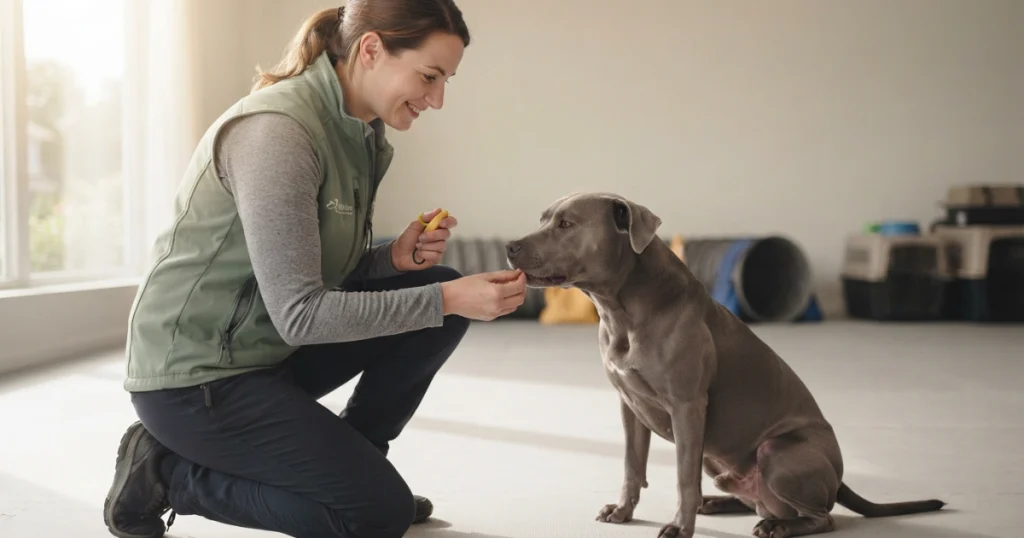
Reward calm behavior immediately. When your dog stays relaxed in a situation that would normally trigger anxiety, mark it right away — a clicker or a verbal marker like “yes” — then reward. Timing matters more than the reward itself; a reward that comes a few seconds late reinforces whatever your dog is doing then, not the calm moment you meant to reward.
Watch your tone. Calm, reassuring communication supports training; frustration or yelling adds stress and works against you.
Give anxious dogs a job. Basic commands like “sit,” “stay,” or “place” give a dog something concrete to focus on instead of the trigger. Start in a quiet, low-stress setting before practicing anywhere more distracting.
Choosing rewards: high-value treats (chicken, cheese), a favorite toy, verbal praise, or access to a preferred resting spot — different dogs respond to different things. Whatever you choose, keep it consistent across everyone in the household; mixed signals slow progress.
Progressing safely:
| Training Step | Environment | Duration | Reward Type |
|---|---|---|---|
| Introduce command | Quiet home setting | 5–10 min daily | High-value treats |
| Practice consistency | Familiar indoor spaces | 10–15 min daily | Treats and praise |
| Confidence practice | Slightly busier areas | 10–20 min | Variety of rewards |
| Real-world application | Challenging situations | Short sessions initially | Immediate high-value treats |
Simple exercises help too — asking for a sit before attention, or a paw before a reward — teaching your dog that calm, deliberate actions lead to good outcomes.
Desensitization and Counter-Conditioning
Desensitization and counter-conditioning dogs training is the backbone of most anxiety treatment. This method is called gradual exposure, and it works by slowly raising the intensity of a trigger while keeping your dog comfortable at every step — applied specifically to time alone, it’s also the core of how you’d treat separation anxiety. The short version:
Desensitization exposes your dog to a trigger at very low intensity, then gradually increases exposure while keeping them comfortable throughout — thunder played at a barely audible volume, gradually turned up over sessions, for example.
Counter-conditioning pairs the trigger with something your dog genuinely enjoys, so the trigger itself starts predicting something good — the vacuum turning on at a distance while high-value treats appear, gradually closing that distance over time.
Used together, they address the emotional cause of anxiety rather than just managing the symptom. Go slow: rushing either technique tends to increase anxiety rather than reduce it.
Building Confidence Through Training Games
Knowing how to build confidence in an anxious dog matters as much as trigger-specific training. Reward-based training for anxious dogs works through small, repeated successes that teach a dog new situations can go well, not just that they’re survivable.
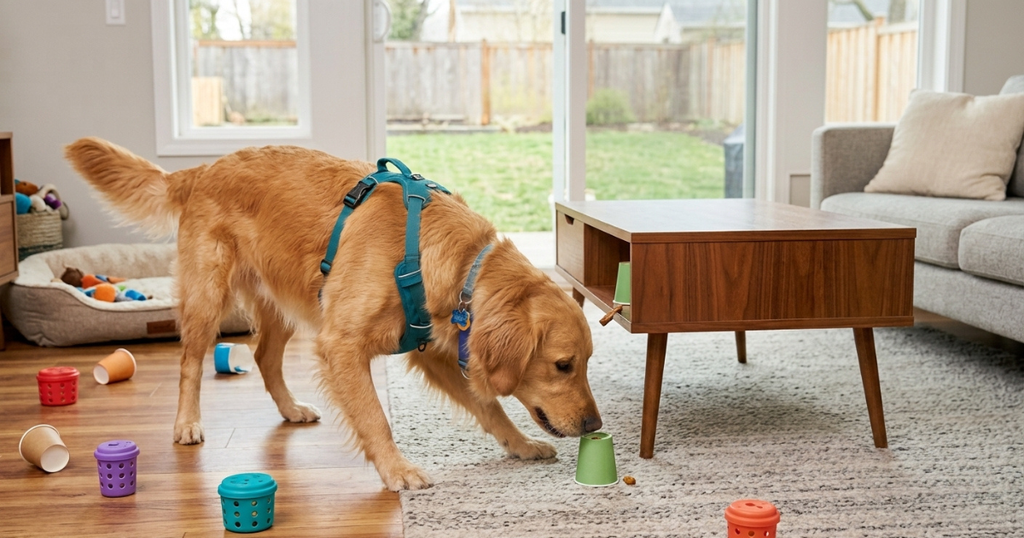
Games worth trying:
- Hide-and-seek with treats around the house
- “Find it” scent games with treats or toys
- Target training (nose-to-hand touch)
- Simple household obstacle courses
- Name recognition and toy identification games
These build problem-solving skills, create positive experiences, and strengthen your bond — and consistent small wins add up to real anxiety reduction over time.
What to Look for in a Professional Trainer
The right trainer matters, especially for an anxious dog. Look for recognized, science-based credentials through the Certification Council for Professional Dog Trainers — CPDT-KA, KPA CTP, or CBCC-KA — and a fear-free or anxiety-focused specialization.
Red flags to avoid: trainers promoting dominance theory, quick-fix promises, shock or pinch collars, harsh corrections or yelling, and leash-jerking or punitive methods. Anxiety-based behavior takes time and consistency — anyone promising instant results is a warning sign, not a shortcut.
Common Mistakes to Avoid
- Using harsh tools — shock, prong, or pinch collars
- Forcing a dog into a stressful situation and expecting them to “get over it”
- Keeping an unpredictable daily routine instead of one that helps anxious dogs feel secure
- Skipping regular exercise and mental stimulation
- Expecting overnight results
- Over-comforting during anxious episodes in a way that reinforces the fear response
- Working with trainers who promise rapid, unrealistic results
When to Seek Professional Help
Reach out to a veterinarian or certified behaviorist if your dog shows:
- Aggression — growling, snapping, or biting when afraid
- Severe separation anxiety with escape attempts or self-injury
- Constant trembling, even in normally safe environments
- Loss of appetite lasting more than 24 hours
- Destructive behavior causing real harm or damage
- Sudden behavioral change in a previously stable dog
- Disorientation or confusion, especially in senior dogs
Professional support may include a structured behavior modification plan and, in some cases, medication — a vet might walk you through options like the ones covered in our guide to treating separation anxiety.
Conclusion
Managing dog anxiety takes patience, consistency, and the right reward-based approach — not a single trick, but a method applied steadily over time. Every dog is different, and progress depends on personality, history, and specific triggers; small wins, like staying calm for a few extra seconds in a stressful moment, are real progress, not something to dismiss. For severe or persistent anxiety, loop in a veterinarian or certified behaviorist alongside the training.
Ready to put this into practice? Explore our calming solutions for separation anxiety — clickers, puzzle toys, and calming aids to support reward-based training.
FAQ
Why is positive reinforcement more effective than punishment for anxious dogs?
It builds positive emotional associations with triggers, while punishment can increase fear and damage trust. Reward-based methods address the emotional cause rather than just suppressing the symptom.
What can I do right now to start reducing my dog’s anxiety?
Reward calm behavior with treats, praise, or toys the moment it happens. Use a consistent marker (clicker or verbal cue) and practice simple commands in a low-stress setting before adding distractions.
How does desensitization actually reduce anxiety?
It introduces the trigger at very low intensity and increases exposure gradually while the dog stays relaxed, which builds tolerance without ever spiking into panic.
How long does positive reinforcement training take to show results?
Mild anxiety can improve within a few weeks of consistent practice. Moderate to severe anxiety can take several months and often benefits from professional guidance alongside training.
When should I get professional help instead of just training at home?
If your dog shows aggression, self-injury, escape attempts, persistent trembling, or severe separation anxiety — that’s the point to bring in a vet or certified behaviorist rather than continuing alone.
What’s the difference between desensitization and counter-conditioning?
Desensitization is about controlled, gradual exposure to a trigger. Counter-conditioning pairs that trigger with something the dog enjoys, so it starts predicting something good instead of something scary. They’re usually used together.
Sources: American Veterinary Society of Animal Behavior — Position Statement on Humane Dog Training, Certification Council for Professional Dog Trainers