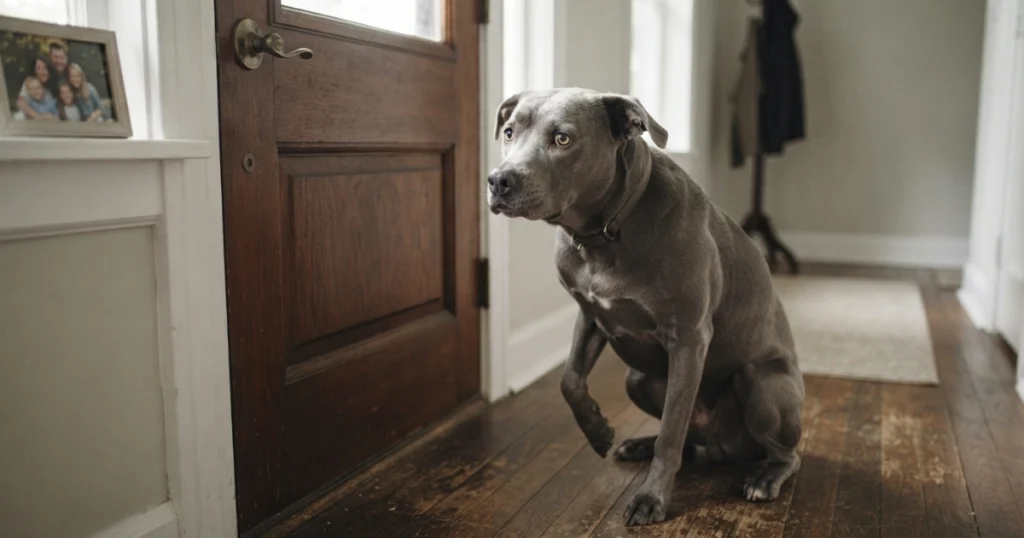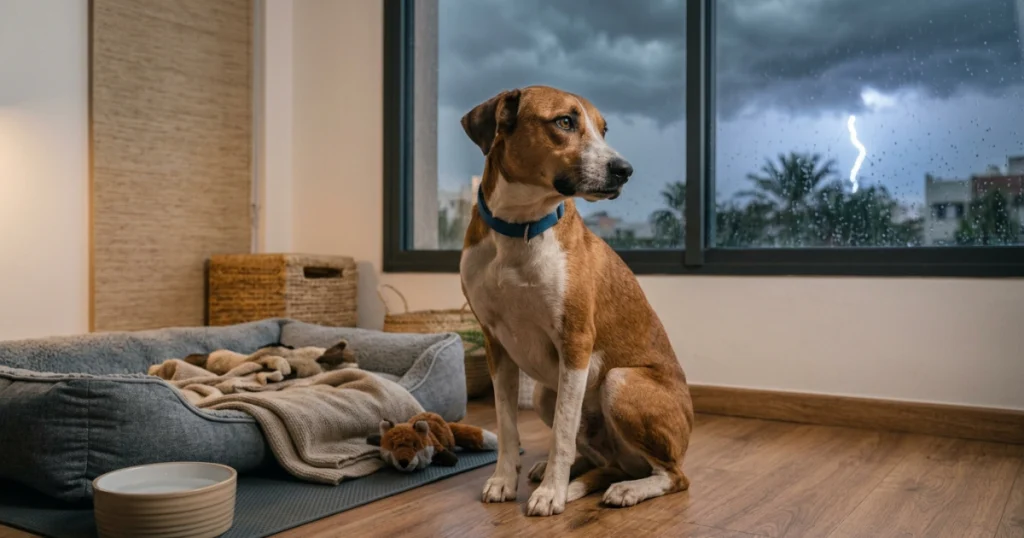
If your dog becomes anxious, destructive, or vocal whenever you leave the house, separation anxiety may be the cause. This common behavioral condition can be stressful for both dogs and their owners, but with the right approach, many dogs show significant improvement over time.
Treating separation anxiety typically involves a combination of behavior modification, gradual desensitization, mental enrichment, exercise, and — in some cases — veterinary support. The best results come from consistent training and patience rather than quick fixes.
Key Takeaways
- Effective treatment combines desensitization, counterconditioning, environmental management, and positive reinforcement.
- Regular exercise and mental enrichment support treatment but aren’t a standalone fix.
- Crate training helps some dogs feel secure — but it isn’t right for every dog with separation anxiety.
- Moderate to severe cases may benefit from professional guidance and, in some cases, medication.
- Consistency matters most — most dogs improve gradually, not overnight.
- Early prevention and independence-building can reduce the risk of anxiety developing at all.
Understanding Separation Anxiety in Dogs
Separation anxiety is a behavioral condition that causes real stress when a dog is left alone or separated from its owner. Unlike normal boredom, it can trigger panic-like reactions that affect a dog’s behavior and emotional well-being. Effective treatment starts with correctly identifying anxiety-related behavior and choosing the right management strategy for the severity you’re actually dealing with.
Common Causes
Shelter adoption, moving to a new home, major routine changes, the loss of a family member, or other stressful experiences can all contribute. The exact cause varies dog to dog, but identifying the specific causes of separation anxiety in dogs helps guide treatment.
Severity Levels
Not all cases look the same, and matching the treatment to the severity sets realistic expectations for how fast you’ll see progress:
| Severity Level | Description | Typical Behaviors |
|---|---|---|
| Mild (separation intolerance) | Least intense form | Mild anxiety, whining, pacing, some destructive behavior |
| Moderate | Middle-range intensity | Moderate destruction, excessive barking, indoor accidents |
| Severe | Most intense form | Extreme destruction, self-injury, severe panic responses |
Mild cases might respond to behavioral training alone. Severe cases usually need professional help and multiple approaches combined.
Recognizing the Signs
Dogs with separation anxiety often show distress the moment they’re left alone: excessive barking, destructive chewing, pacing, whining, escape attempts, or indoor accidents. Some react even earlier, to departure cues themselves — picking up keys, putting on shoes, approaching the door.
Why Separation Anxiety Requires Professional Attention
Left untreated, separation anxiety tends to get worse, not better, making it harder for dogs to cope over time — sometimes escalating into destructive behavior, excessive vocalization, escape attempts, or self-injury. Beyond the behavior itself, the ongoing stress can affect a dog’s quality of life and strain the relationship with their owner.
Research presented at an AVMA Convention session noted that around 20% of dogs are affected by some form of separation anxiety, and that roughly 15% don’t respond to medication while another 15% don’t respond to behavioral treatment alone — underscoring why an individualized plan, rather than a generic one, tends to work best.
When to Consult Your Veterinarian
Reach out if:
- Anxious behaviors continue despite trying home solutions
- Your dog injures itself during panic episodes
- The anxiety is affecting your daily life or your relationship with your dog
- Your dog’s quality of life seems affected
- You feel unable to manage it on your own
| Warning Sign | Severity Level | Action Needed |
|---|---|---|
| Pacing and whining when you leave | Mild | Try home management first |
| Destructive behavior or accidents inside | Moderate | Contact your veterinarian |
| Self-injury or extreme drooling | Severe | Seek a vet or behaviorist immediately |
| Relationship strain with owner | Critical | Professional intervention required |
Your vet can rule out medical conditions contributing to the behavior and, for more complex cases, refer you to a board-certified veterinary behaviorist for a personalized plan.
How to Treat Separation Anxiety in Dogs
There’s no instant cure, but many dogs improve significantly when training, environmental management, and professional support come together. Positive reinforcement is the foundation — rewarding calm behavior builds confidence, while punishment or harsh corrections tend to increase fear and make things worse, which is why positive reinforcement training forms the backbone of most treatment plans.
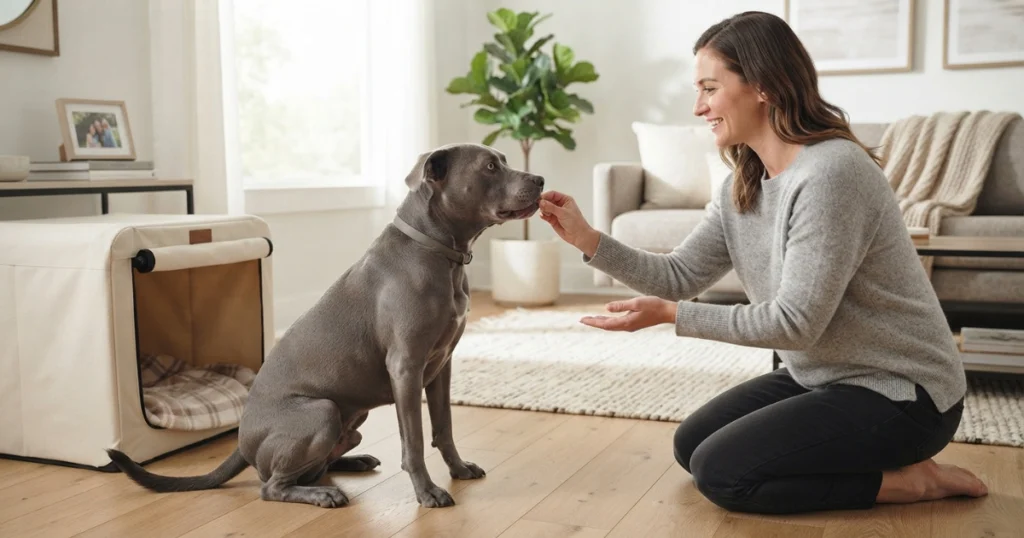
Every dog responds differently, which is why the strongest treatment plans combine multiple strategies rather than leaning on one:
- Crate or safe-space training (when appropriate)
- Counterconditioning exercises
- Gradual desensitization to departure cues
- Regular physical exercise
- Mental enrichment and interactive toys
- Environmental management
- Veterinary guidance and medication when needed
Crate Training as a Safe Haven Strategy
A crate can give some dogs a safe, comfortable space when introduced properly — but it isn’t a direct treatment for separation anxiety, and it isn’t right for every dog. The goal is a space your dog feels secure in, never confined or punished.
Introducing the Crate Properly
Let your dog explore at their own pace, door open, using treats and praise to build a positive association:
- Start with short 10–15 minute sessions, door closed
- Feed meals inside the crate to build positive association
- Save special toys and chews specifically for crate time
- Slowly increase duration as comfort grows
- Never use the crate as punishment
When Crate Training May Not Work
Some dogs become more distressed when confined, especially in isolation. Excessive panting, persistent whining, frantic escape attempts, or self-injury are signs that crating is increasing anxiety rather than reducing it — video monitoring can help you catch this. In these cases, a dog-proofed room, exercise pen, or baby gate may work better. If you’re unsure, check with your vet or a qualified behavior professional.
Counterconditioning Techniques
Counterconditioning changes your dog’s emotional response to being left alone — instead of associating departures with fear, your dog gradually learns to associate alone time with something positive.
Helpful strategies:
- High-value treats in long-lasting chew toys before you leave
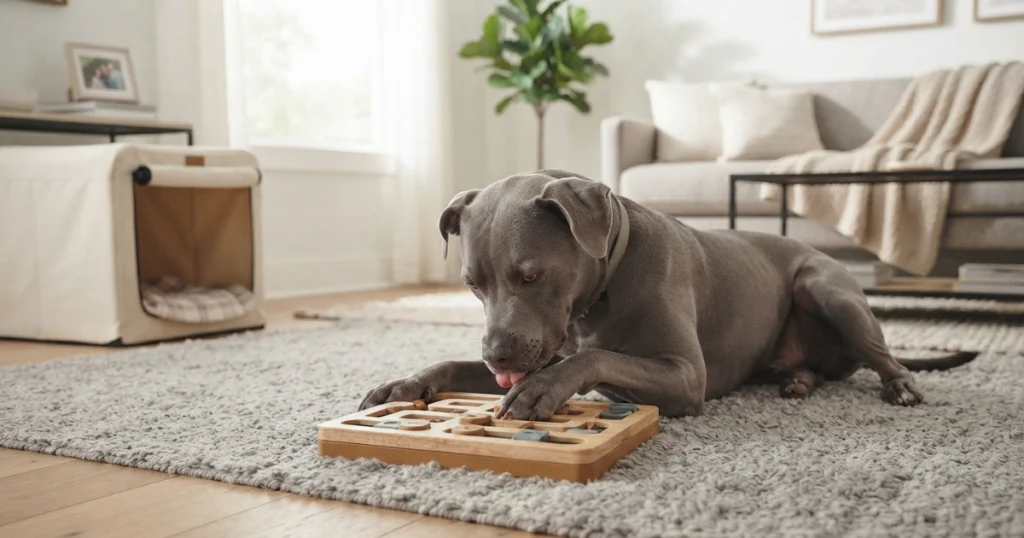
- Puzzle feeders that slowly dispense food and encourage problem-solving
- Recently worn clothing left nearby for scent comfort
- Calming music or background noise
- Treat-dispensing cameras to reward calm behavior remotely
Dogs with severe anxiety may be too distressed to eat or engage with treats during your absence — in those cases, counterconditioning tends to work best paired with desensitization and professional guidance, rather than used alone.
Desensitization Methods for Departure Cues
Dogs quickly learn to read departure signals — keys, shoes, a bag — and for anxious dogs, these small routines can trigger stress before you’ve even left. The ASPCA recommends starting exactly here: with predeparture cues, since some dogs begin to feel anxious the moment they notice you getting ready to go.
Practicing Low-Key Departures and Arrivals
Dramatic goodbyes and excited greetings tend to raise anxiety, not lower it. Keep both calm and neutral:
- Grab your keys and sit back down
- Put on your shoes and watch TV
- Get your coat and do household chores
- Reward your dog each time you complete one of these without actually leaving
Then ignore your dog for 10–15 minutes before leaving and after returning — wait until they’re calm before giving attention. Vary the routine often (sometimes grab keys and stay, sometimes put on shoes without going anywhere) so your dog can’t predict what a given cue actually means.
Gradual Separation Time Increases
Start with very short separations and increase duration slowly. The core principle: stay below your dog’s anxiety threshold. If your dog becomes highly distressed, you’re moving faster than they can handle — this step-by-step pacing is its own skill, covered in full in our gradual exposure training guide, which goes beyond just separation time.
| Week | Separation Duration | Daily Sessions | Focus Area |
|---|---|---|---|
| 1–2 | 30 seconds – 2 minutes | 3–4 | Establishing baseline |
| 3–4 | 3–5 minutes | 3–4 | Building tolerance |
| 5–6 | 5–10 minutes | 2–3 | Extending duration |
| 7–8 | 10–20 minutes | 2 | Advancing gradually |
| 9–12 | 20–45 minutes | 1–2 | Reaching longer periods |
Progress varies — some dogs improve within weeks, more severe cases can take months. Always return before your dog becomes highly stressed, and end every session on a positive note; pushing too fast slows progress rather than speeding it up.
Exercise and Mental Stimulation
Exercise plays a real role in managing separation anxiety, but works best as part of a broader plan, not a standalone fix. It burns excess energy, promotes relaxation, and makes it easier for a dog to settle during separation, especially as part of a consistent daily routine for an anxious dog.
Exercise Before Departure
| Dog Size | Exercise Duration | Best Activities |
|---|---|---|
| Small breeds (under 25 lbs) | 15–20 minutes | Short walks, indoor play, fetch |
| Medium breeds (25–50 lbs) | 20–30 minutes | Jogging, fetch, agility games |
| Large breeds (over 50 lbs) | 30–45 minutes | Long walks, swimming, running |
These are general guidelines — adjust for your dog’s age, breed, health, and energy level.
Mental Enrichment
Physical exercise is only half the picture. Interactive puzzle toys, food-dispensing toys, scent work games, rotating toy variety, and short daily training sessions all help keep the brain engaged, which supports — though doesn’t replace — behavior modification training.
Calming Aids and Prescription Medications
Calming products and prescription medication can help some dogs, particularly alongside behavior modification — they tend to work best combined with desensitization and counterconditioning rather than used alone.
Natural Calming Options
Results vary by dog, and these should be treated as supportive tools, not standalone treatments:
- Calming supplements (L-theanine, melatonin, chamomile, passionflower)
- Calming vests with gentle, constant pressure
- Synthetic pheromone products
- A comfortable, secure resting area
These may ease mild anxiety, but are unlikely to resolve moderate-to-severe cases without behavior modification alongside them.
Anti-Anxiety Medications Your Vet May Prescribe
Medication doesn’t teach new behaviors on its own, but it can lower anxiety enough for a dog to actually learn during training:
| Medication Type | Purpose | Duration |
|---|---|---|
| SSRIs (e.g., fluoxetine) | Long-term anxiety management | Weeks to months for full effect |
| Benzodiazepines (e.g., alprazolam) | Acute anxiety relief | Hours to days |
| Tricyclic antidepressants (e.g., clomipramine) | Sustained anxiety reduction | Ongoing management |
The medications above are prescription-only and mentioned for informational purposes — they should only be used under direct veterinary guidance, which determines the right choice, dosage, and timing for your dog. The right option depends on your dog’s symptoms, medical history, and severity; some are for long-term management, others for short-term, situational use.
Prevention Strategies
Prevention matters as much as treatment. Dogs generally feel more secure with a predictable routine, and gradually teaching independence can reduce the risk of anxiety developing or worsening.
Building confidence through routine:
- Keep meals, walks, playtime, and training consistent
- Practice short periods of alone time, even when someone is home
- Encourage independence through positive separation experiences
- Keep departures and arrivals calm
- Prepare your dog gradually for routine changes
Professional companionship options:
| Option | Benefits | Best For |
|---|---|---|
| Doggy daycare | Socialization, exercise, supervised care | Dogs needing daily companionship |
| Dog walker service | Breaks up alone time, adds activity | Dogs with 8+ hour work schedules |
| Pet-friendly workplace | Constant companionship, reduced stress | Dogs that benefit from owner proximity |
Planning ahead for big changes — a return to office work, a move — helps your dog adjust more comfortably. Small, gradual changes are almost always easier for dogs than sudden disruption.
Conclusion
Treating separation anxiety takes patience, consistency, and evidence-based technique — there’s no instant fix, but combining desensitization, counterconditioning, mental enrichment, exercise, and environmental management genuinely moves the needle for most dogs.
Progress gradually, and focus on building confidence during separation rather than rushing the timeline. If your dog’s anxiety is severe, worsening, or causing self-injury, bring in your vet or a qualified behavior professional. With the right plan and consistent practice, most dogs learn to feel calmer and safer when left alone.
Ready to build a plan? Explore our calming solutions for separation anxiety — enrichment toys, calming aids, and training tools to support every stage above.
Frequently Asked Questions
How do you treat separation anxiety in dogs?
Gradual desensitization, counterconditioning, behavior modification, mental enrichment, and consistent routines. Moderate to severe cases may also benefit from veterinary guidance and medication.
Can separation anxiety in dogs be cured?
Many dogs improve significantly with proper treatment. Some overcome it completely; others need ongoing support to maintain progress and avoid relapses.
How long does it take to reduce separation anxiety?
It depends on severity — mild cases may improve within weeks, severe cases can take several months of consistent training.
Does crate training help separation anxiety?
Crate training can help some dogs feel secure, but it is not a cure for separation anxiety. For certain dogs, confinement may actually increase stress if not introduced properly.
When should I seek professional help for separation anxiety?
If your dog shows severe panic, repeated escape attempts, self-injury risk, nonstop vocalization, or no improvement after consistent home-based work — professional collaboration gives your dog the best shot at real progress.
What can I do when I leave the house?
Mental enrichment, a predictable routine, exercise beforehand, and gradual alone-time training all build confidence over time.
Can dogs grow out of separation anxiety on their own?
Rarely without intervention — it can worsen over time if left untreated. Early training and behavior modification lead to better outcomes.
Sources: AVMA — Separation Anxiety Calls for Specific Diagnosis, Treatment, ASPCA — Separation Anxiety