
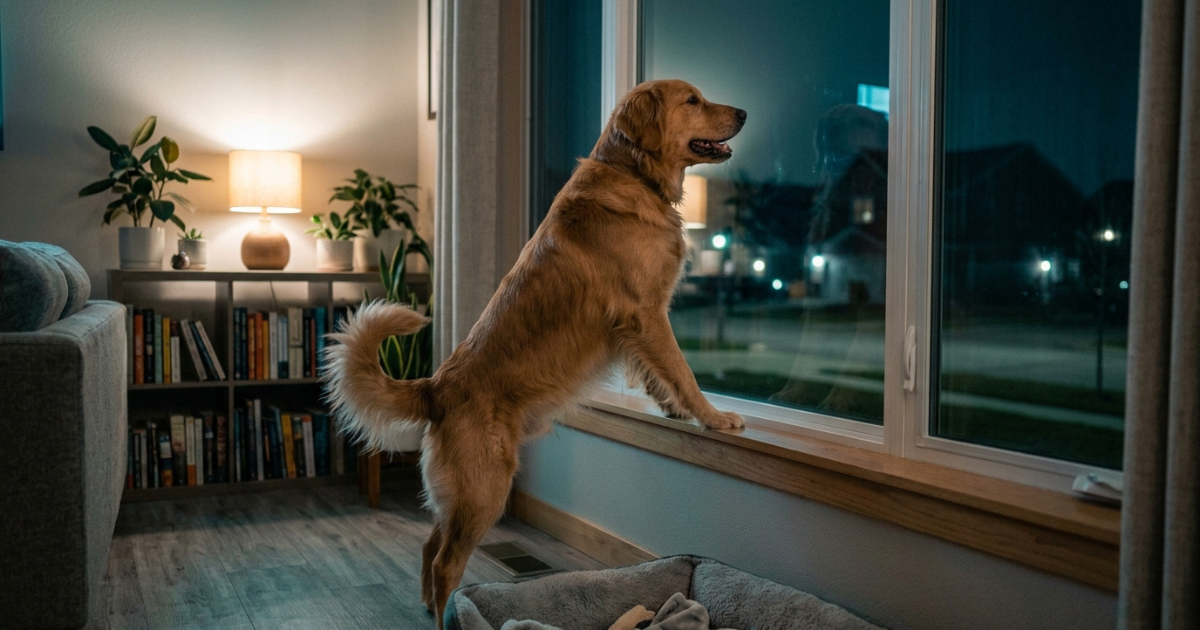
If you’re searching for how to stop a dog barking at night, chances are you’ve already tried the easy stuff — closing the bedroom door, hissing “quiet” from under the covers, maybe just lying there hoping it stops on its own. If none of that worked and you’re now reading an article about it at whatever hour this is, you already know dog barking at night doesn’t respond well to random fixes.
It does respond to a methodical approach, though. Most dogs who bark at night settle down within a few weeks once you figure out what’s driving it and work through the problem in order — not by jumping straight to whatever tool promises the fastest silence. (If you haven’t pinned down the cause yet, our breakdown of why does my dog bark at night: 8 real causes is worth a look before or alongside this plan.)
Key Takeaways
- Nighttime barking almost always has a trigger — external (sound, smell) or internal (pain, anxiety, boredom).
- Watch body language and timing to narrow down the cause: alert posture points outward, pacing points to anxiety, confusion points to cognitive decline in seniors.
- Sudden-onset barking, or barking paired with disorientation or appetite changes, deserves a vet visit before anything else.
- Don’t punish barking before you know the cause — it can add fear on top of pain or anxiety.
Why Order Matters Here
It’s tempting to go straight for a bark collar or a spray bottle the first time a 2 a.m. bark session costs you sleep. The problem is that barking is the symptom, not the actual issue — suppress it without addressing what’s underneath, and you usually get short-term quiet followed by the same behavior resurfacing somewhere else, sometimes worse.
The plan below starts with figuring out what’s going on, moves into environment and routine, and only then gets into direct training. That order isn’t arbitrary — trainers and veterinary behaviorists land on roughly the same sequence because skipping ahead tends to backfire. It also lines up with the AVSAB’s position on humane dog training, which recommends reward-based methods over punishment for exactly this reason — aversive tools can suppress a behavior without resolving what’s driving it, and sometimes make the underlying anxiety worse.
Step 1: Watch Before You Act
For a few nights, just observe. Don’t intervene yet, as long as it’s safe to hold off.
Pay attention to when the barking starts, how long it goes on, whether it’s every night or occasional, what your dog seems to be reacting to, and whether anything around the house or yard has changed recently — a new neighbor’s dog, a light left on outside, furniture moved near a window.
This step gets skipped constantly, and it’s the one that actually determines which of the next steps matter for your dog.
Step 2: Get a Vet to Rule Out Pain or Illness
If there’s any chance the barking is tied to discomfort, illness, or age-related changes, get your dog checked before sinking weeks into a training plan. This matters more than most owners expect going in — training a dog to stay quiet through physical pain doesn’t fix anything, and it adds stress on top of whatever’s already wrong.
This is especially worth doing if the barking showed up suddenly, or if your dog is older and the barking is paired with confusion, disorientation, or accidents. That combination points toward canine cognitive dysfunction rather than a straightforward behavior issue, and it changes what kind of plan actually helps.
Step 3: Build a Wind-Down Routine
Getting the evening routine right does more heavy lifting here than most owners expect.
Finish exercise a couple hours before bed. A genuinely tired dog settles faster, but exercise too close to bedtime can leave some dogs wired rather than worn out — the timing matters as much as the activity itself.
Add mental work in the early evening. A short training session, a food puzzle, or a slow sniff-heavy walk burns mental energy that would otherwise show up as restlessness once the house goes quiet.
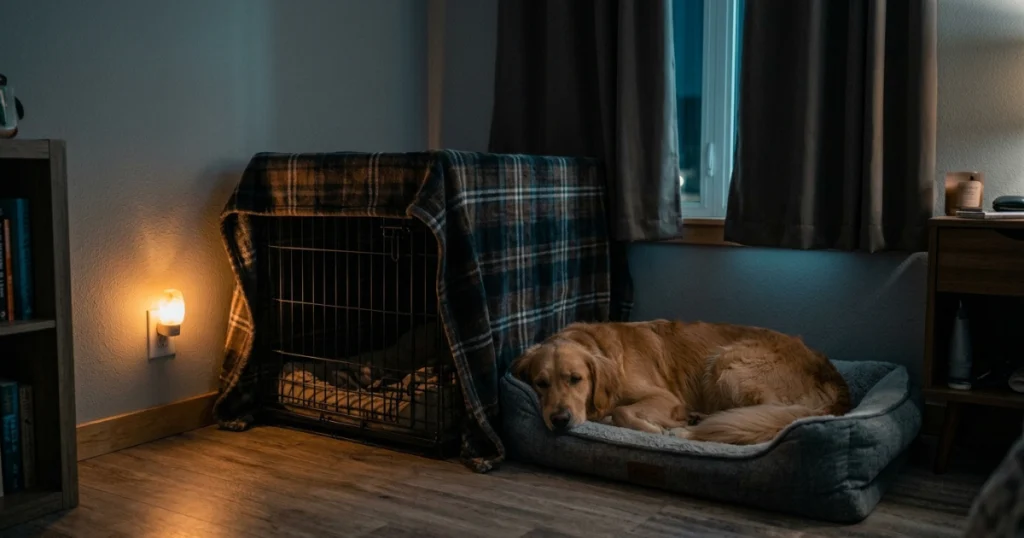
Set up the sleep space itself. Comfortable temperature, minimal outside visual stimulation — closing blinds, moving the bed away from a street-facing window, keeping the room dim. Small changes, but they cut down on how many triggers your dog encounters while you’re asleep and unavailable to help.
Step 4: Teach an Actual “Quiet” Cue
A trained “quiet” cue gives your dog something to do instead of bark, rather than just punishing the noise after the fact — the same reward-based approach that works for most anxiety-driven behaviors applies here too.
Here’s how it works in practice: let your dog bark once or twice at a normal trigger, or prompt it yourself with a knock or doorbell sound during a daytime session. The second your dog pauses — to breathe, to sniff a treat near their nose — say “quiet” in a calm, level tone. Reward immediately for the silence, not the bark. Then gradually stretch out how long they need to stay quiet before the reward comes.
Practice this during the day, when you’re not exhausted and your dog isn’t already keyed up. Once it’s reliable in a calm setting, it transfers to nighttime situations much more easily.
A few ways this goes sideways: rewarding a beat too late (which just reinforces the bark that came right before it), using a sharp or loud tone for the cue itself (which can read as you barking along, ramping things up instead of calming them down), and being inconsistent about enforcing it — a cue that only works some nights teaches your dog nothing reliable.
Step 5: Handle Separation Anxiety Differently
If Step 1 pointed toward separation anxiety — barking that starts specifically when you leave the room or house, alongside pacing, whining, or destructive behavior — a “quiet” cue on its own usually won’t cut it.
The ASPCA recommends treating separation anxiety through gradual desensitization: short absences that slowly get longer, teaching your dog that being alone isn’t actually a threat. It’s a slower process than basic bark training — our guide to treating separation anxiety walks through the full method — and for moderate-to-severe cases, a certified trainer or veterinary behaviorist will get you there faster than troubleshooting alone.
Step 6: Manage the Environment
Mask outside sound. A fan, white noise machine, or low radio can cover the passing cars, wildlife, and neighborhood dogs that might otherwise pull your dog’s attention and trigger alert barking.
Block what they can see. If your dog reacts to movement outside a window, closing curtains or relocating their sleeping spot away from that window can make a real difference.
Decide on the crate carefully. There’s no universal answer here. A crate gives some dogs a secure, den-like space that reduces overstimulation-driven barking. For others — especially dogs with separation anxiety — confinement makes things worse. Watch the first few sessions closely: calm settling is a good sign, while frantic escape attempts, heavy drooling, or nonstop howling means the crate isn’t right for that dog.
Tools That Actually Help (and Ones That Don’t)
A few products genuinely support this process — worth knowing which ones, since not all of them do:
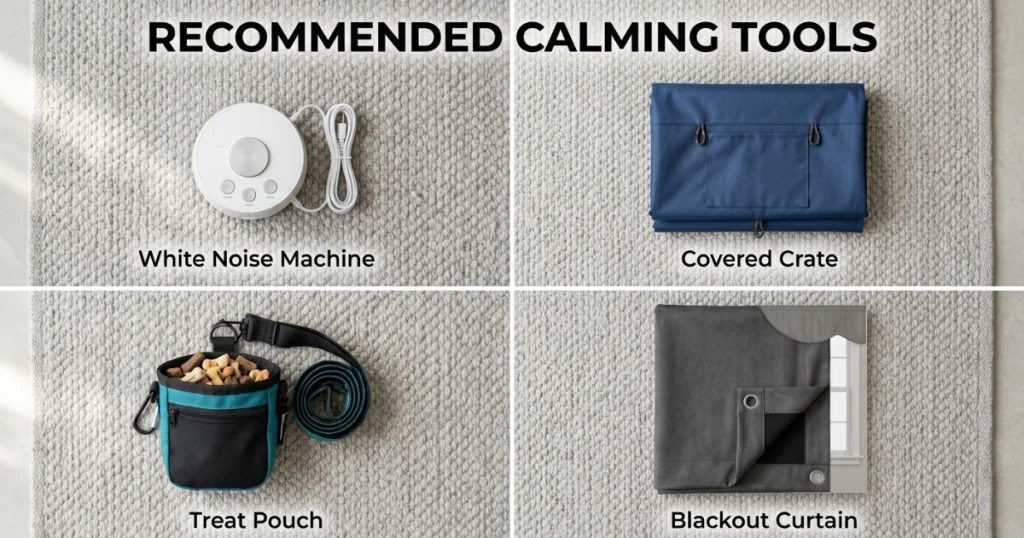
- White noise machines or a simple box fan — one of the cheapest, most reliable environmental fixes for sound-triggered barking. No training required, works from night one.
- Covered or wire crates with a blanket draped over three sides — creates the den-like enclosure some dogs settle into faster than an open room. Test it during the day first; a dog who paces or scratches at a covered crate needs a different setup, not more time in it.
- Treat pouches for quiet-cue training — having rewards within reach matters more than it sounds. Fumbling for treats in the dark is how timing mistakes happen, and timing is most of what makes the quiet cue work.
- Blackout curtains or a simple blind — cheap, effective for dogs reacting to headlights, streetlights, or outdoor movement.
- Bark collars (shock or citronella) — leaving this here deliberately: these suppress the sound without addressing the cause, and both the ASPCA and AVSAB advise against them as a first-line tool, particularly for anxiety- or fear-driven barking.
Step 7: Give It Time
This doesn’t resolve overnight, despite the timing being almost funny. Most dogs need two to four weeks of consistent routine, training, and environmental changes before you see a clear, lasting drop in barking.
Expect the occasional setback — a loud wildlife night or a broken routine can trigger a temporary relapse. That’s not a sign the plan failed; it just means your dog, like anyone, isn’t perfectly consistent either.
What Tends to Make Things Worse
Yelling “quiet” or “stop” usually escalates the arousal you’re trying to bring down. Reaching for punishment-based tools first — shock collars, citronella collars — can suppress the sound short-term while doing nothing for the anxiety or discomfort underneath, and sometimes making it worse. Responding inconsistently, sometimes ignoring the barking and sometimes rushing in, sends mixed signals that slow everything down. And skipping the vet visit means you might spend weeks training around a problem that’s actually medical.
When to Bring in a Professional
Worth calling a trainer or behaviorist if the barking comes with clear separation anxiety signs like destruction or escape attempts, if you’ve stuck with a consistent plan for several weeks with no real change, if it’s straining things with your neighbors and you need faster results, or if there’s fear or aggression mixed in with the barking. A Certified Professional Dog Trainer or veterinary behaviorist can build something specific to your dog, which matters most for anxiety-driven cases that don’t respond to general advice.
The Bottom Line on How to Stop a Dog Barking at Night
There’s no single trick that solves this. It’s identifying the trigger, ruling out anything medical, building a calmer routine, and reinforcing quiet consistently over time — and most dogs respond well to that combination within a few weeks.
If the barking started suddenly, or your dog is older and seems disoriented alongside it, that’s worth a closer look before you settle on a plan — barking that starts later in life often has different roots than a young dog reacting to noise outside.
FAQ
How long does it take to stop a dog from barking at night? Most straightforward cases improve within two to four weeks of consistent routine and training. Anxiety-driven barking often takes longer and may need professional support.
Should I ignore my dog when they bark at night? Depends on the cause. Ignoring attention-seeking barking often works. Ignoring barking tied to a real need — needing the bathroom, pain, fear — can make things worse, which is exactly why identifying the trigger first matters so much.
Do anti-bark collars work for nighttime barking? They can suppress the sound itself, but they don’t touch the reason behind it, and most veterinary behavior organizations advise against them as a first response, especially for anxiety- or fear-driven barking.
Will a crate help or make barking worse? Entirely dog-dependent. Some settle better with the security of a crate; others become more distressed by confinement. Introduce it gradually and read your dog’s reaction before making it part of the nightly routine.
When should I call a professional instead of handling this myself? If you suspect separation anxiety, see no real progress after a few consistent weeks, or notice fear or aggression alongside the barking, a certified trainer or behaviorist will typically get results faster and more safely than continued solo troubleshooting.
Sources: AVSAB — Position Statement on Humane Dog Training, ASPCA — Separation Anxiety





