Disclosure: This guide may contain affiliate links. If you purchase through them, Relax My Paws may earn a commission at no extra cost to you.
Calm a dog during thunderstorms and fireworks before the first boom hits, because a dog who is already in panic is much harder to settle. This guide gives you a practical plan for the weeks before, the day itself, the noise, and the recovery afterward. It also explains where ThunderShirts, pheromone products, calming supplements, and white noise fit, including what the research does and does not support.
To understand why storms frighten dogs and which signs to watch for, read our guide to Thunderstorm Anxiety in Dogs: Causes, Symptoms, and How to Help first. This page picks up where that one ends.
Key Takeaways
- Layer a few tools. No single product is proven to stop noise fear on its own.
- Start before the noise: weeks ahead for vet advice, days ahead for tools, hours ahead for setup.
- Test every tool on a calm day, not on the night you need it.
- Fireworks add an escape risk, so check ID and microchip details early.
- Strong or worsening fear needs a vet, not a bigger shopping cart.
Your Plan at a Glance
| When | What to do |
|---|---|
| Weeks before | Talk to your vet if fear is strong. Start a daily calming supplement if your vet agrees. Start low-volume sound practice. Check ID tag and microchip. Test each tool on a calm day. |
| Day of | Exercise and toilet breaks early. Set up the quiet room. Start pheromone products and put the wrap on before the noise. |
| During | Stay home and stay calm. Layer sound. Offer a long-lasting food toy. Keep outdoor time on a leash. |
| After | Let your dog decompress. Note what helped and what didn’t. |
Thunderstorms vs. Fireworks: What Changes
The same dog can handle one and panic at the other, because the two events behave differently.
- Thunderstorms arrive with little warning and can last for hours. You can’t schedule them, so your calming kit needs to be ready all season.
- Fireworks are predictable. They cluster around July 4 and New Year’s Eve, according to dvm360, so you can plan weeks ahead, including the vet visit.
- Escape risk is higher with fireworks. Sharp bangs can make a dog bolt, which is why ID checks come first in the plan below.
Before: Weeks and Days Ahead
Call your vet early if the fear is moderate or severe
Timing matters more than most owners expect. Some fast-acting medications take 30 to 60 minutes to work, and daily medications take weeks to build up, so both need planning ahead (dvm360). Cornell’s vets advise trialing any prescribed medication “on a day without noise” first (Cornell).
Never give human medication or a leftover sedative from an earlier visit.
Check ID and microchip details
Cornell’s advice is to make sure the ID collar and microchip information are current, and to secure the home and yard. Do this in October, not on December 31.
Start sound practice
Playing recorded thunder or fireworks at very low volume while your dog eats or plays, then raising it slowly, is the long-term fix. Our step-by-step exposure training guide covers the method in full, so we won’t repeat it here.
Test every tool on a calm day
Try the wrap, the music, and the quiet room when nothing is happening. If your dog won’t tolerate one on a calm afternoon, it won’t help at 11 p.m. with fireworks going off.
On the Day: Set Up Before the Noise
- Exercise early. Plan the long walk and the last toilet break so you’re not outside when the noise starts .
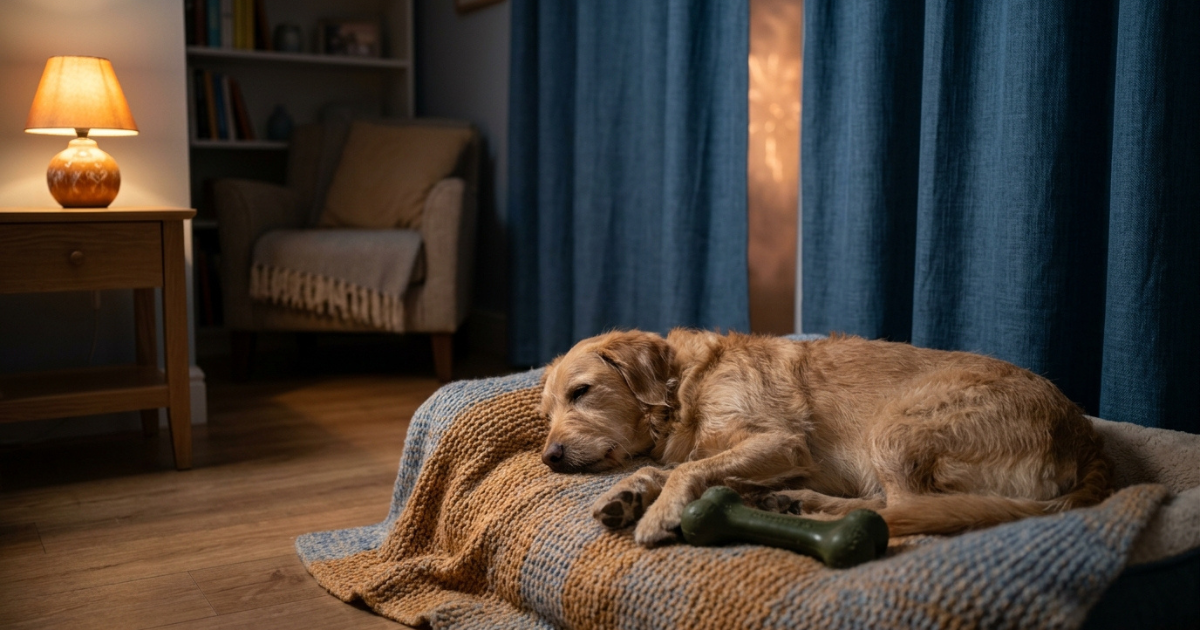
- Pick the room. Choose a familiar room farthest from the noise, with few or no windows. For fireworks, that means the side of the house facing away from the display. Use a crate only if your dog already loves it.
- Block the flashes. Close curtains so lightning and sparks are less visible (Whole Dog Journal).
- Start the calming layers early. Plug in the diffuser or put on the collar ahead of time, and fit the wrap before the first bang, not after your dog is already panicking.
During: What to Do While It Happens
- Stay home if you can. Many dogs with noise phobias also struggle when alone, so Cornell suggests staying with your dog or arranging a sitter your dog knows.
- Keep your own behavior calm. Normal voice, normal movement. If your dog wants contact, calm touch is fine.
- Layer the sound. Cornell notes that layering two types of sound, such as white noise plus music, can help drown out the noise.
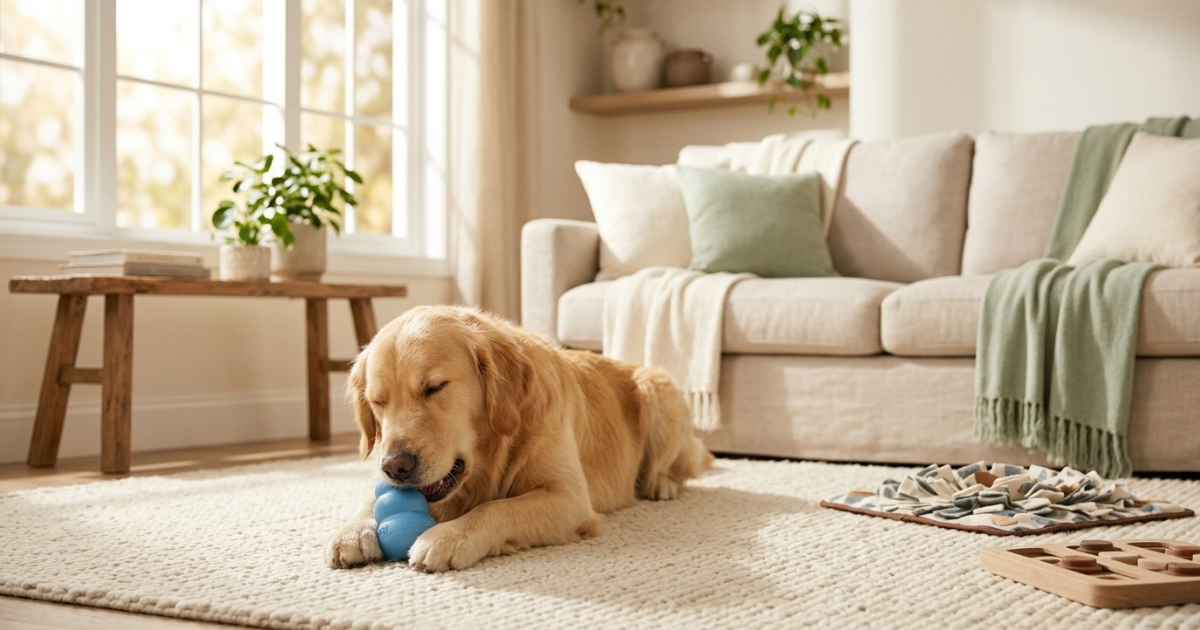
- Offer a long-lasting food toy. A stuffed frozen KONG Classic or a lick mat gives your dog something to do. If your dog refuses food entirely, that’s a sign the fear is high, so don’t push it.
- Keep outdoor time on a leash. Cornell advises a leash even in a fenced yard.
- Never punish. It only adds to the distress.
What the Evidence Says About Each Tool
ThunderShirt
A ThunderShirt applies constant, gentle pressure. The evidence is mixed. A 2014 study of 90 anxious dogs (not a storm study) found lower heart rates with a properly fitted wrap, while a 2024 review called the evidence limited and prone to bias. A loose wrap didn’t show the same effect, so measure your dog’s chest at the widest point and put it on before the noise starts. It suits mild to moderate fear. Details are in our ThunderShirt review.
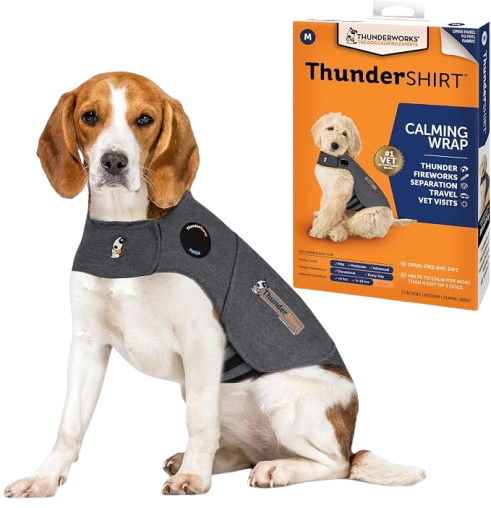
ThunderShirt
Gentle Pressure Dog Calming Vest, Reduces Anxiety from Thunder, Fireworks & Car Rides
Pheromone Products (Adaptil and ThunderEase)
Dog-appeasing pheromone products such as Adaptil and ThunderEase use a synthetic version of a natural calming signal. In one small placebo-controlled lab study, 24 beagles wearing a collar showed lower fear scores during simulated thunder than those given a placebo. That was not a real storm, so treat pheromones as a background layer and start them before the trigger.
The collar is the most portable format. Adaptil’s collar isn’t always in stock on Amazon or Chewy, so the ADAPTIL Calming Collar review also covers the ThunderEase version, which uses the same licensed technology. For the room your dog retreats to, a ThunderEase diffuser refill covers the space, and a ThunderEase spray can refresh bedding or a crate.
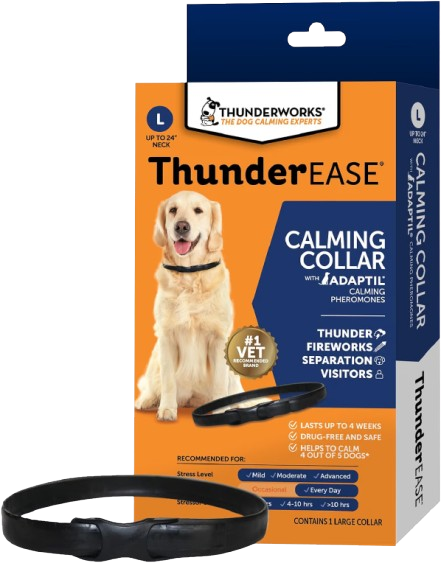
Adaptil Calming Collar
A drug-free pheromone collar designed to help reduce stress from common anxiety triggers.
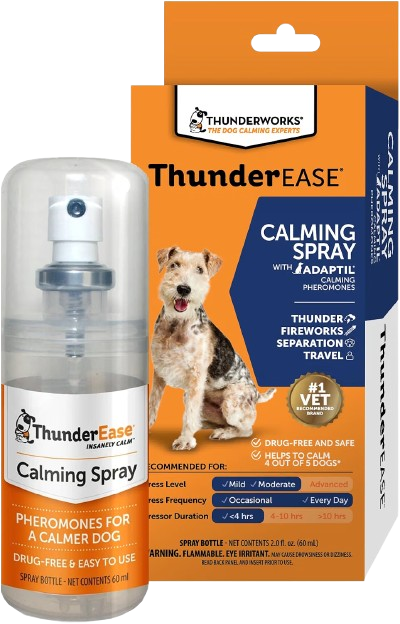
ThunderEase Pheromone Calming Spray
A drug-free pheromone spray designed to help reduce stress during travel, vet visits, and boarding.
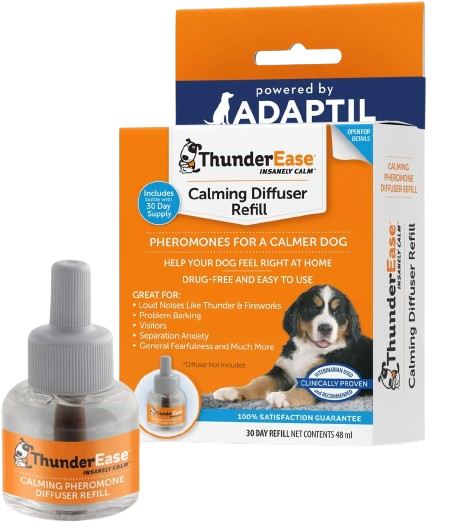
A pheromone diffuser refill
Designed to help reduce stress from separation, fireworks, thunderstorms, and other common triggers.
Calming Supplements (Purina Pro Plan Calming Care)
Daily products such as Purina Pro Plan Calming Care are not fast-acting. Purina’s own study (24 Labradors, not peer-reviewed) focused on separation anxiety, not noise, and we found no noise-specific trials. They make sense for fireworks only if you start weeks ahead (for example, six to eight weeks before New Year’s Eve) and treat them as a baseline, not a rescue. For a dog who needs help tonight, ask your vet about a situational option. Details are in our Purina Calming Care review.
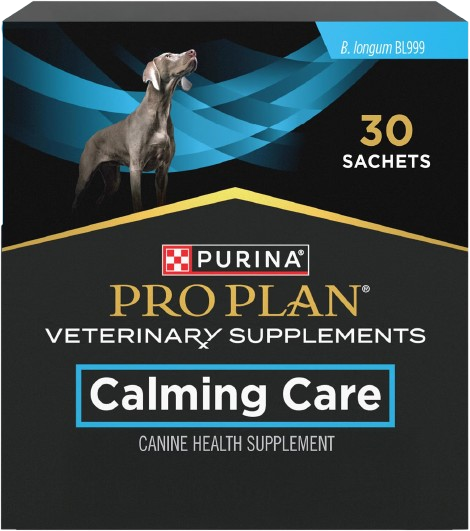
Purina Pro Plan Veterinary Supplements
A probiotic supplement designed to support dogs during common stressful situations.
White Noise and Music
White noise masks the bangs and softens the contrast between sudden sounds and the background. Cornell and trainers recommend it, but we did not find controlled trials for dogs and storms, so treat it as sensible management rather than proven treatment. Whole Dog Journal advises using “Through a Dog’s Ear” style music only if your dog already enjoys it during calm times, because playing it only during storms can teach your dog to link it with fear. Play it daily at low volume so it becomes ordinary, and use it with every dog as a base layer.
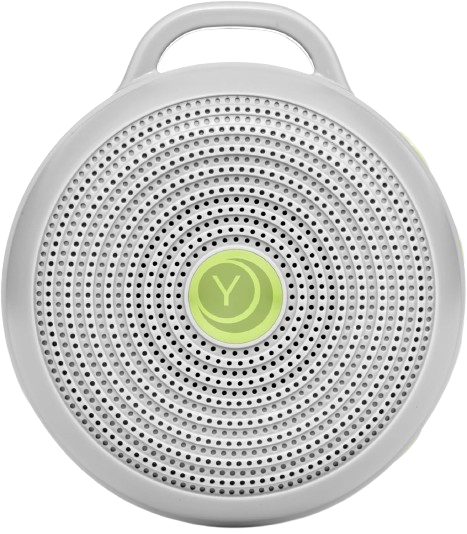
Yogasleep Hushh Portable White Noise Sound Machine
Mistakes That Make Calming Tools Fail
- Putting the wrap on at the peak of panic. Put it on before the noise starts.
- Trying a new tool for the first time on the big night. You won’t know whether it helped or hurt.
- Playing calming music only during storms. The music becomes a warning signal.
- Using a loose wrap. Fit decides whether it does anything.
- Expecting a pheromone to act like a sedative. It’s a background layer, not an off switch.
- Starting a daily supplement the week of the event. Products like Purina Calming Care take weeks to judge.
- Relying on one tool. Layering is the better bet.
After: The Recovery Hour
- Keep the room quiet and let your dog settle without fuss.
- Offer water and a normal meal when your dog is ready.
- Jot down what you used and how your dog responded, so next time you keep what worked and drop what didn’t.
When Tools Aren’t Enough
If your dog panics despite a full plan, tries to escape, hurts themselves, or gets worse each season, see your vet or a veterinary behaviorist. Whole Dog Journal also reports veterinary behaviorist Dr. Karen Overall’s warning that some older sedatives can make fear worse, which is one more reason to let your vet choose the medication. Our thunderstorm anxiety guide has an overview of the options vets commonly discuss.
FAQ
Does a ThunderShirt work for fireworks? For some dogs, yes. The evidence is mixed, and fit matters. Try it on a calm day first and put it on before the noise starts.
Can I use a ThunderShirt, pheromones, and white noise together? Yes, and layering is generally recommended. Introduce them one at a time on calm days so you can tell what helps.
How early should I start preparing for New Year’s Eve or July 4? Call your vet several weeks ahead if the fear is moderate or severe. Check ID details and start sound practice at the same time, and have your tools tested well before the day.
Is it okay to leave my dog home alone during fireworks? It’s better not to. Cornell recommends staying with your dog or arranging a trusted sitter, since many noise-phobic dogs also struggle when alone.
What if my dog bolts? Prevention comes first: current ID tag, up-to-date microchip registration, secured doors and yard, and leashed outdoor time. These are all in the plan above.
Do calming supplements or treats help with fireworks? It depends on the type. Daily supplements like Purina Pro Plan Calming Care need weeks to build up, while situational chews are meant to be given closer to the event. Results vary, so test on a calm day and check with your vet if your dog takes other medication.
Sources: Cornell Riney Canine Health Center, Whole Dog Journal, dvm360, The 2024 systematic review of compression wraps.