A car ride should be an enjoyable experience for both you and your dog, but for some pets, travel leads to real discomfort and nausea. Motion sickness in dogs is a common condition that can cause excessive drooling, restlessness, whining, or vomiting during travel. It tends to affect puppies more than adult dogs, though dogs of any age can experience it. Understanding why it happens — and what you can do about it — can make travel safer and more comfortable for your canine companion.
This guide pairs well with our companion pieces on travel anxiety causes and signs and how to calm a dog during car rides, which cover the emotional side of travel stress in more depth — motion sickness and anxiety often overlap, but they’re not the same thing.
Key Takeaways
- Motion sickness is physical (inner ear and balance), while travel anxiety is emotional — they call for different fixes.
- Puppies are most at risk, since their inner ear balance system is still developing.
- Early signs like drooling, lip licking, and lethargy often show up before actual vomiting.
- Simple prep — a light meal, good ventilation, a secure crate or harness — prevents most mild cases.
- Vets can prescribe anti-nausea medication for dogs who don’t improve with adjustments alone.
What Is Motion Sickness in Dogs?
Motion sickness happens when the sensory signals a dog’s brain receives during travel become conflicting or overwhelming. The inner ear, which controls balance, detects movement — but if the eyes are focused on a stationary interior (like the inside of a car), the brain gets mixed messages. That mismatch is what triggers the nausea and discomfort.
It shows up most often during car rides but can also occur on boats, trains, or planes. Puppies are especially vulnerable because their inner ear is still developing, though adult dogs can be affected too — sometimes from anxiety rather than a purely physical response to movement.
Symptoms of Motion Sickness in Dogs
Signs vary from dog to dog, but they’re usually noticeable during or shortly after travel:
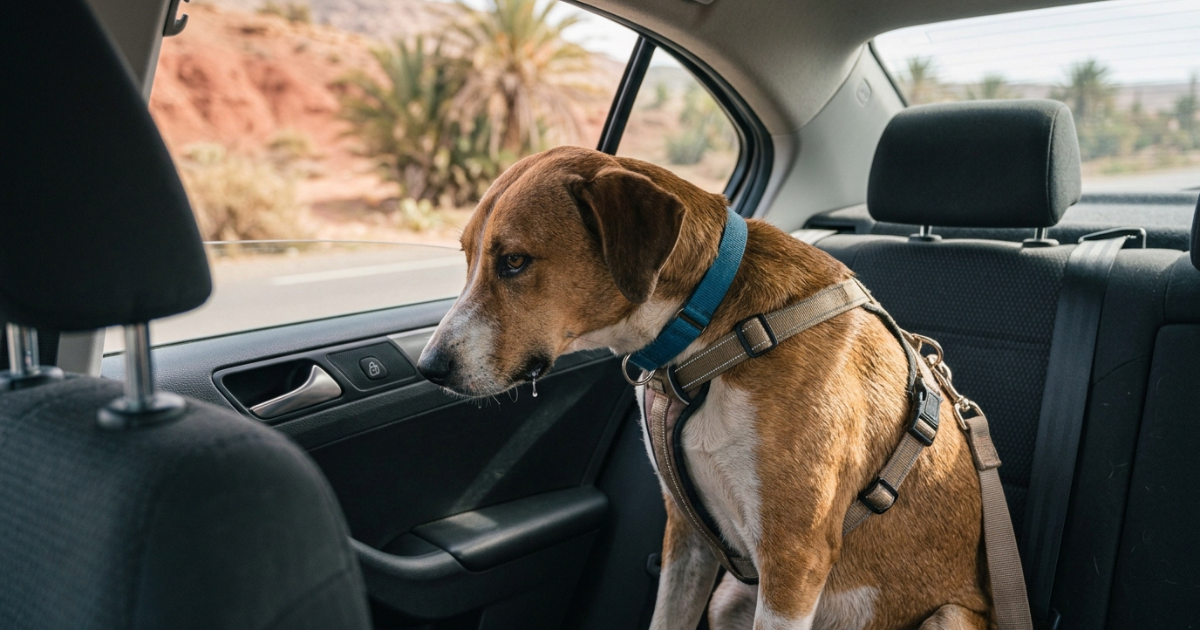
- Excessive drooling — often one of the earliest signs, sometimes starting even before the vehicle moves
- Lip licking and frequent swallowing — classic signs of nausea; watch for repeated lip licking or gulping
- Whining or restlessness — vocalizing more, pacing, or repeatedly shifting position
- Yawning and lethargy — a low head, disinterest in surroundings, or persistent yawning
- Vomiting — in more severe cases, nausea progresses to actually being sick during the trip
- Panting or trembling — some dogs pant heavily or shake even in a cool vehicle
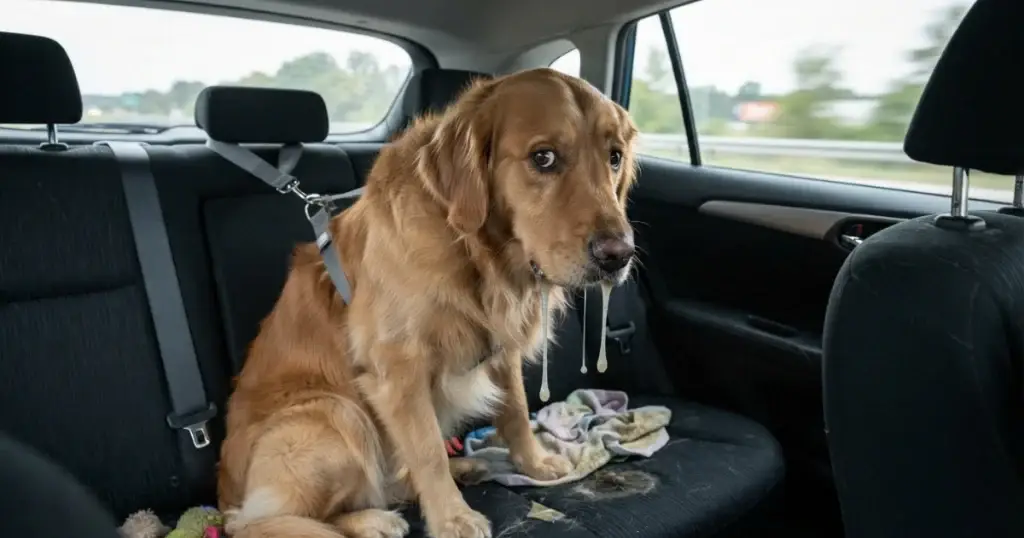
If you’re seeing these signs consistently during travel, your dog is likely dealing with motion sickness rather than simply disliking car rides.
Causes of Motion Sickness in Dogs
Several factors can contribute, and the underlying cause can differ from dog to dog.
Underdeveloped inner ear balance system. Puppies are especially prone because the balance-related structures in the inner ear are still maturing — most dogs naturally improve as they grow.
Sensory mismatch. The inner ear detects movement while the eyes are fixed on a static interior, and that conflicting information confuses the brain — the same mechanism behind motion sickness in people.
Travel anxiety. Dogs that associate car rides with stressful destinations, like the vet’s office, can develop anxiety around travel, which can worsen or even mimic the physical symptoms of motion sickness.
Poor ventilation or strong odors. A warm, stuffy vehicle or strong smells — food, fuel, air fresheners, cleaning products — can lower a dog’s threshold for nausea.
Negative past experiences. Dogs remember. A dog that’s felt sick in the car before may get stressed ahead of future trips, which raises the odds of symptoms recurring.
Motion Sickness vs. Travel Anxiety in Dogs
Motion sickness and travel anxiety have different root causes and often call for different treatment approaches — it’s worth knowing which one (or both) you’re dealing with.
| Factor | Motion Sickness | Travel Anxiety |
|---|---|---|
| Primary Cause | Sensitivity to motion and balance disturbances | Fear, stress, or negative travel experiences |
| Typical Onset | During movement | Before or during travel |
| Common Symptoms | Nausea, drooling, lip licking, vomiting | Panting, pacing, whining, trembling |
| Most Affected Dogs | Puppies and young dogs | Nervous or previously stressed dogs |
| Symptoms After Travel | Usually resolve quickly | May continue after the trip |
| Treatment Focus | Reducing nausea and motion-related discomfort | Managing stress and anxiety |
Some dogs deal with both at once, which can make symptoms more severe and harder to manage without veterinary guidance — telling the two apart matters, since each one calls for a different treatment focus.
Which Dogs Are Most at Risk?
Any dog can develop motion sickness, but a few groups are more vulnerable:
- Dogs that rarely travel — infrequent exposure means fewer chances to adapt to motion
- Puppies and young dogs — their inner ear balance systems are still developing
- Dogs with a history of travel-related illness — past sickness raises the odds of it happening again
- Anxious or nervous dogs — particularly ones that associate car travel with stressful experiences
How to Help a Dog With Motion Sickness
A few practical adjustments can meaningfully cut down on travel-related nausea:
Avoid feeding right before travel. Hold off on large meals for two to four hours beforehand — traveling on an empty or lightly filled stomach significantly lowers the risk of nausea.
Ensure good ventilation. Keep the car cool and well-aired, whether that’s cracked windows or AC. Fresh air genuinely helps with nausea.
Use a secure travel space. A properly secured crate or a dog-specific seat belt cuts down on swaying and unpredictable movement, which lessens the sensory confusion driving the nausea.
Start with short trips. Gradually build up from very short drives to longer ones as your dog gets more comfortable — this desensitization approach can be highly effective over time.
Reduce visual stimulation. Positioning your dog lower in the vehicle, or using a covered crate, keeps them from watching fast-moving scenery, which can worsen nausea.
Stay calm and reward positive behavior. Praise and the occasional treat during and after trips help build a more relaxed association with travel over time.
How Veterinarians Diagnose Motion Sickness
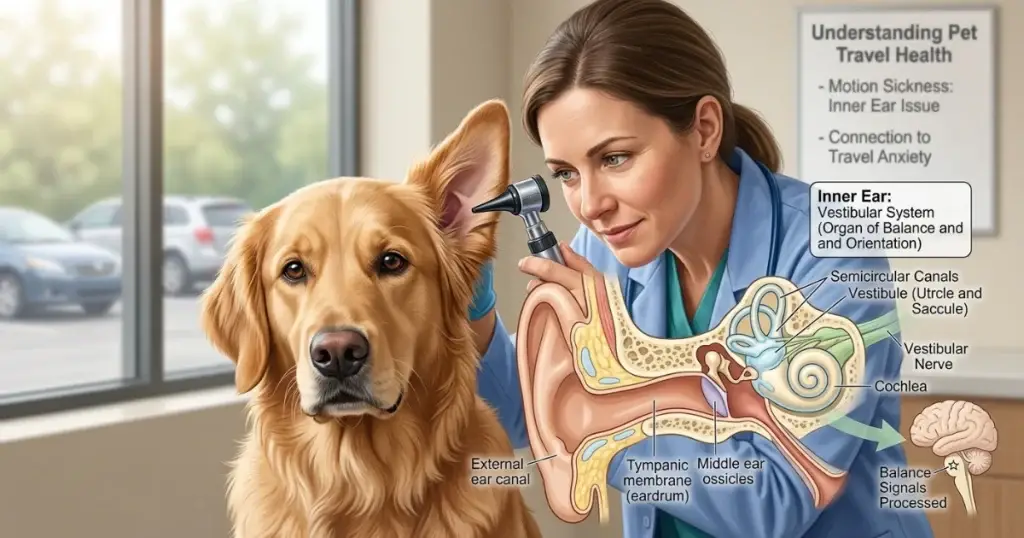
There’s no single definitive test for motion sickness in dogs. Vets typically diagnose it by taking a thorough travel and symptom history alongside a physical exam.
That exam often includes checking the ears, since infections or structural problems in the inner ear can cause balance disturbances and nausea that resemble — or worsen — motion sickness. Depending on the dog’s health history, the vet may also consider gastrointestinal causes of vomiting or nausea. Combining the clinical findings with a clear pattern of travel-related symptoms usually confirms motion sickness as the most likely diagnosis.
Treatment Options
If home adjustments aren’t enough, your veterinarian may recommend one or more of the following:
Prescription anti-nausea medication. Maropitant (brand name Cerenia) is FDA-approved specifically for preventing and treating vomiting caused by motion sickness in dogs, and the FDA has also approved a generic version. It’s typically given about two hours before a car ride, and according to the American Kennel Club, it’s often the first medication vets reach for to prevent or stop vomiting in dogs.
Other motion sickness medications that reduce dizziness and gastrointestinal upset.
Antihistamines, which may help mild cases by reducing nausea and providing mild sedation.
Anti-anxiety medication, for dogs whose symptoms are primarily driven by fear or stress rather than the physical motion itself.
Behavioral desensitization programs, designed to build positive associations with car travel over time.
Important: Never give your dog human medications — including over-the-counter antihistamines or anti-nausea products — without first consulting your veterinarian. Some medications that are safe for people are toxic to dogs.
If your dog is experiencing frequent vomiting, severe anxiety, or ongoing travel-related distress, schedule a veterinary exam before your next trip.
Prevention Tips for Future Trips
Preventing motion sickness comes down to consistency and preparation:
- Take regular short car rides to build familiarity and tolerance
- Create positive associations with the vehicle — treats, praise, a calm demeanor
- Keep the car cool and well-ventilated
- Use appropriate restraints or travel crates
- Schedule rest stops on longer journeys
- Avoid heavy meals in the hours before travel
- Follow your veterinarian’s advice when medication is part of the plan
With time and consistent effort, most dogs become noticeably more relaxed and comfortable during travel.
Conclusion
Motion sickness in dogs is a manageable condition. Recognizing the signs early, understanding the potential causes, and taking steps to make travel more comfortable can make a real difference for your dog. Whether the fix is a simple adjustment, behavioral training, or veterinary treatment, most dogs can learn to travel with more ease and confidence over time.
Not sure what’s behind your dog’s car troubles? Browse our calming solutions for travel anxiety — including gear and calming aids that can ease motion sickness too.
Frequently Asked Questions
Can puppies outgrow motion sickness?
Yes. Many puppies outgrow it as their inner ear and balance system mature. Symptoms often improve naturally with age, especially when travel experiences are kept positive.
How long does motion sickness last in dogs?
Symptoms typically resolve shortly after travel ends, though a dog may feel slightly unsettled for a few hours afterward in some cases.
Is motion sickness the same as travel anxiety?
No. Motion sickness causes physical symptoms like nausea and vomiting from sensory conflict, while travel anxiety is rooted in fear or stress. The two can occur together.
Can dogs get motion sickness on planes or boats?
Yes. It can happen during any form of travel involving sustained or irregular movement, since flights and boat trips affect the inner ear the same way car rides do.
Can motion sickness be prevented entirely?
Often, yes. Gradual desensitization to travel, good ventilation, appropriate restraint, and — when needed — veterinary medication can significantly reduce or eliminate symptoms in most dogs.
Sources: , U.S. FDA — Maropitant Citrate Tablets Approval, AKC — Cerenia for Dogs