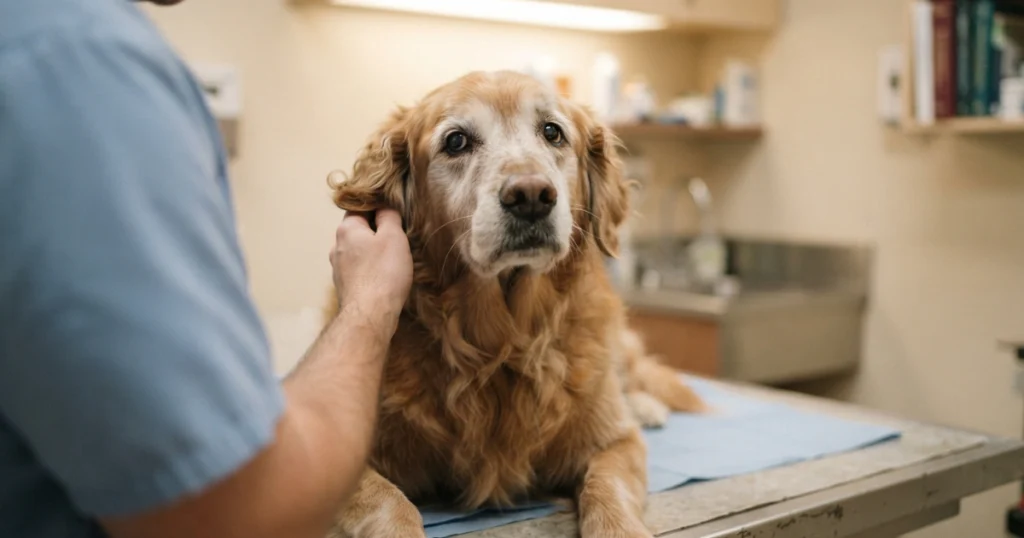
Some dogs shake off travel nerves after a few short trips. Others pace, drool, whine, or shut down completely every time the car door opens, no matter how much preparation goes into the ride. For these dogs, training and gradual exposure aren’t always enough on their own — and that’s usually when dog travel anxiety medication enters the conversation.
Medication isn’t the first answer for every anxious traveler, and it’s not something to decide alone. Whether it makes sense depends on how severe the anxiety actually is, how your dog tends to respond to stress, and — above all — a vet’s read on your dog’s specific situation.
Here’s what actually goes into that decision, what the process tends to look like once medication is on the table, and why it works best alongside behavior support rather than in place of it.
Table of Contents
When Medication Actually Comes Up
Medication usually enters the picture once a dog’s travel anxiety goes past everyday discomfort — not simply because a dog would rather stay home, but because anxiety is genuinely limiting what they can safely do. That tends to mean severe distress that doesn’t ease up with consistent management at home, travel conditions that become unsafe (getting a panicking dog to the vet, through a move, or through an emergency), or a dog still struggling significantly despite an owner already doing the right things.
A few concrete signs worth mentioning at your next vet visit, rather than waiting to see if they resolve on their own:
- Severe or persistent distress that doesn’t fade once the trip is over
- Repeated vomiting or other physical symptoms tied specifically to travel
- Self-injury attempts — frantic scratching, chewing, or trying to escape a crate or seatbelt
- Inability to settle at any point, even on short drives
- Reactions that seem to be getting worse over time instead of better
If any of that sounds familiar, it’s worth raising with your vet rather than waiting to see if things improve on their own.
The Kinds of Medication Vets Reach For
A specific drug and dose should only ever come from a vet who’s actually examined your dog — but it helps to know the general categories involved, and roughly which situations each one fits. Veterinary behaviorists generally group these into faster-acting, situational options and slower-acting, daily options — a framework the Merck Veterinary Manual lays out for veterinary professionals, distinguishing “baseline or maintenance” anxiolytics from “as-needed” ones based on how often and predictably a dog’s triggers occur.
For a single stressful event — a car trip, a flight, a move — vets often reach for something short-acting, like trazodone or gabapentin, dosed once ahead of the event based on the specific drug and their read on your dog. Exactly how far in advance varies by medication and by dog, which is part of why a vet handles the timing rather than a general rule. For dogs whose anxiety extends well beyond travel itself, a longer-term option like fluoxetine may come up instead, usually alongside behavior modification rather than as a standalone fix — the same kind of prescription a vet might reach for with separation anxiety or generalized anxiety, not something specific to the car.
None of this is a substitute for your vet’s judgment on your specific dog. It’s just useful context going into that conversation.
How Vets Land on the Right One
There’s no single correct prescription for travel anxiety. Vets typically weigh:
- The dog’s age
- Health history, including any existing conditions
- How severe the anxiety actually is
- Other medications the dog is currently on
- Previous reactions to medication, if any
- The type and duration of travel — a 20-minute drive is a different situation than a cross-country flight
That’s also why a medication that works well for one dog isn’t automatically right for another, even when the symptoms look similar from the outside.
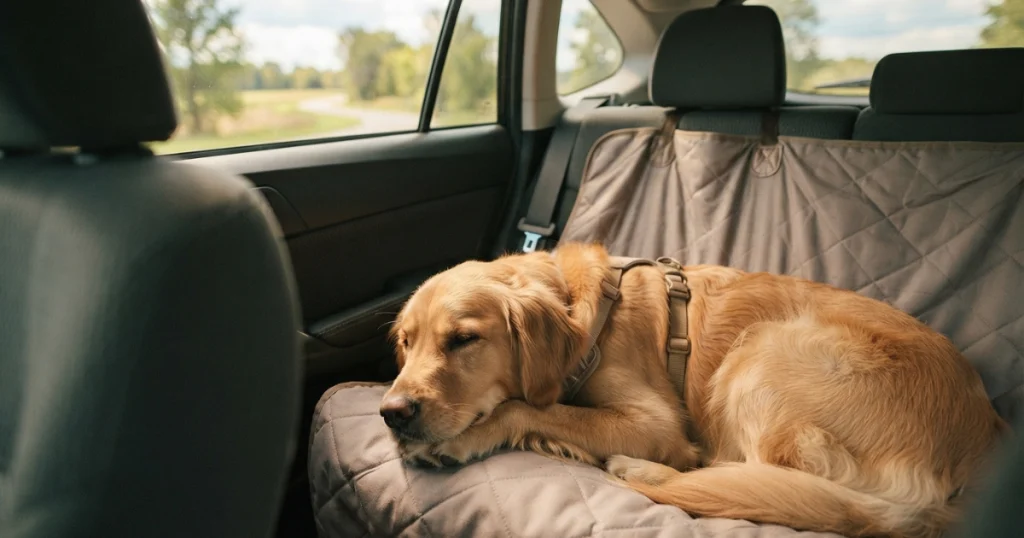
What Happens Once Medication Is Prescribed
If your vet does prescribe something, a few things are usually part of the process:
- Timing matters. Medication is typically given on a specific schedule — often well before the anxiety-inducing event starts, not once symptoms are already underway.
- Side effects are possible. Your vet should walk you through what’s normal and what would warrant a call back.
- The response gets monitored. Not every dog reacts to a given medication the same way, which is part of why a trial run matters.
- A test run happens before it counts. Trialing on a short, low-stakes drive gives you and your vet a real read on how your dog responds before relying on it for a longer or higher-stakes trip.
- Dose changes go through your vet, not you. Adjusting the amount, or stopping suddenly because things seem better, can cause its own problems — that decision belongs to whoever prescribed it.
Medication Isn’t a Replacement for Behavior Work
Medication can make travel genuinely more manageable for a dog that’s struggling — but it isn’t usually meant to carry the whole load. Behavior work still matters, even for a dog on medication, because it addresses the underlying association a dog has with travel rather than just softening the symptoms in the moment.
If you haven’t already worked through a structured approach to building comfort with the car, running a day-by-day exposure plan alongside whatever your vet recommends tends to get better, more lasting results than medication on its own — and pairing it with calming aids during the ride itself gives your dog support at both ends of the process.
Can You Give Your Dog Human Anxiety Medication?
No — worth stating plainly. Medications made for people aren’t automatically safe for dogs, and even when a drug is used in both species, the dosing, formulation, and risk profile aren’t the same. Some human medications are outright dangerous for dogs.
If you’re considering medication for your dog’s travel anxiety, the only safe path runs through your veterinarian — not your own medicine cabinet.
When Medication Isn’t the Right Call
Occasional, mild nervousness generally doesn’t need a prescription — that’s really just the flip side of the severity threshold above. What’s more worth flagging is the two things medication can quietly mask instead of solve:
- The symptoms might actually be motion sickness rather than anxiety — they can look similar from the outside, but it’s a different problem with a different fix
- An underlying medical issue hasn’t been ruled out yet, and some physical conditions can mimic anxiety at a glance
In these cases, a vet visit is still worthwhile — the outcome might just be a different plan entirely rather than a prescription.
Questions Worth Asking Your Vet
A few clear questions can help you get more out of the appointment:
- What are you recommending, and why this one specifically?
- When and how should I give it relative to travel?
- What side effects should I watch for?
- Could this interact with anything else my dog is taking?
- What should I track once we start, and when should I check back in?
FAQ
What can I give my dog for travel anxiety? There’s no default answer here — it comes down to your dog’s specific triggers, health history, and how a vet reads the severity, not something to pick off a list on your own.
Do dogs need anxiety medication for car rides? Most don’t. It typically only comes up when the anxiety is severe, persistent, or interferes with safe travel — not for everyday nervousness.
How long does dog anxiety medication take to work? It depends on the medication, the individual dog, and what it’s being used for. Some medications are meant for a specific stressful event; others are part of longer-term anxiety management with a different timeline entirely. Your vet should walk you through when to give it and what response to expect.
Can dogs take human anxiety medication? No. Human medications aren’t automatically safe or correctly dosed for dogs, and some can be dangerous. Always check with a vet first.
Should I test medication before a long trip? Generally, yes. Trialing a prescribed medication under veterinary guidance before a longer or higher-stakes trip tells you and your vet how your dog actually responds.