This guide links to product reviews that contain affiliate links. If you buy through them, we may earn a small commission at no extra cost to you.
A crash-tested dog car harness sounds like the safe choice, but the phrase on a package can mean anything from independent certification to a manufacturer’s own claim. This guide shows you how to check what a “crash-tested” label rests on, how to match a harness to your dog, and what the evidence says about two well-known names, Sleepypod and Kurgo.
A harness is not the only option, and for some dogs a crate is the better fit. The review Gunner G1 Kennel: Real Crash-Test Facts Before You Buy explains how that route compares, so this page stays focused on harnesses and on verifying the safety claim itself.
Key Takeaways
- “Crash-tested” is not a standard. Ask who tested the exact model, to what protocol, and for which dog weights.
- Independent certification from the Center for Pet Safety (CPS) is the strongest evidence available, and it applies to specific models and sizes.
- A brand’s own lab report is better than no test, but it is not the same as independent certification.
- Check that the tested version is the one you are actually buying.
- Back seat only, harness attached to the seatbelt (never the collar), and no slack.
Why “Crash-Tested” Means So Little on Its Own
For years there was no agreed way to test a dog harness, which is why the claim became so easy to make. When the Center for Pet Safety published its 2011 harness pilot study, it reported that none of the restraints it tested protected the dog, and it noted that no established safety standards existed, so manufacturers’ testing claims could not be checked against a common benchmark. The tests used a 55 lb crash-test dog in a simulated 30 mph collision under child-seat test conditions.
The 2013 harness study went further, and CPS later issued a published test protocol as a result. Apart from one Sleepypod model, the harnesses it tested were judged insufficient, and CPS disputed their crash-protection claims. The practical lesson has not changed: the label alone tells you very little.
Four Levels of Evidence
Think of a harness’s safety claim as sitting on one of four levels, from strongest to weakest.
Independent certification. A third party with no stake in the sale tests a named model and size against a published protocol and publishes the result. In this category, that is the Center for Pet Safety. The certification applies to the specific model and weight range tested.
Manufacturer-commissioned lab testing. The brand pays a real engineering lab to test the product and publishes the method and results. This is meaningful, because a named lab and stated pass criteria can be checked. It is still the brand’s own report rather than an independent certification, so it is harder to compare with other products.
Unspecific claims. Phrases like “crash tested,” “safety tested,” or “built to crash standards” with no lab, no protocol, and no weight range. Treat these as marketing until proven otherwise.
No claim at all. An honest harness that only says it keeps your dog from roaming the car. That is better than nothing, but it should not be mistaken for crash protection.
How to Check a Claim in Five Minutes
Start with the exact model name and size you plan to buy. Brands often sell several versions, and a test result belongs to one of them.
Next, look for a named lab or testing body and a stated protocol. If you cannot find one on the product page, the claim is unspecific.
Then look at the weight range the test covered. A harness tested with a 25 lb dummy tells you little about a 70 lb dog.
After that, confirm the current status on the Center for Pet Safety site rather than relying on packaging or a retailer listing, because certifications and product lines change.
Finally, check whether the tested version is the current one. A redesign can leave the old test results attached to a new product, which is exactly the situation described for Kurgo below.
Matching the Harness to Your Dog
Certification only helps if the harness fits the dog wearing it.
Start with weight. Sleepypod lists its harness category for dogs from 18 to 110 lb, with separate carriers for pets up to 18 lb, so a very small dog may be better served by a certified carrier, such as the one reviewed in Sleepypod Air Review: In-Cabin Pet Carrier Worth the Price?, than by a harness.
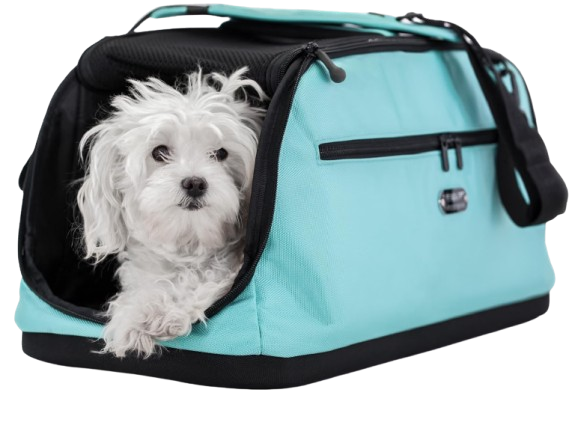
Sleepypod Air
Expandable In-Cabin Pet Carrier, Crash-Tested for Flying & Driving Together
Consider the chest shape. A deep-chested or narrow-waisted dog can fit differently from the average build, and some brands offer different cuts for that reason. Sleepypod’s Clickit Range, for example, comes in Regular and Long types.
Think about habits. A dog who chews straps or unbuckles the seatbelt needs extra thought, and Sleepypod includes a buckle shield for dogs that paw at the release.
Then measure carefully. Take your dog’s chest circumference at the widest point, just behind the front legs, and compare it with the brand’s own size chart instead of guessing from breed or weight alone. Dogs of the same weight can have very different chests, and a loose harness undermines any safety claim.
Finally, let your dog get used to it before the first real trip. Have them wear it at home with treats, practice buckling it into a parked car, and start with short drives before long ones. If your dog resists wearing it at all, build up the habit slowly rather than forcing it.
Sleepypod and Kurgo: What the Evidence Shows
Sleepypod Clickit
Sleepypod states on its product page that the Clickit Range earned a 5-star rating from CPS, with the Regular and Long sizes rated for dogs from 18 to 110 lb. The brand’s name also appears in CPS’s own history: in the 2013 study, CPS labeled an earlier model, the Clickit Utility, a “Top Performer,” while noting that head excursion exceeded limits for the large size. That is useful context, not a guarantee about today’s products, so confirm the current model and size on the CPS site. The Sleepypod Clickit review covers fit, price, and owner feedback in detail.
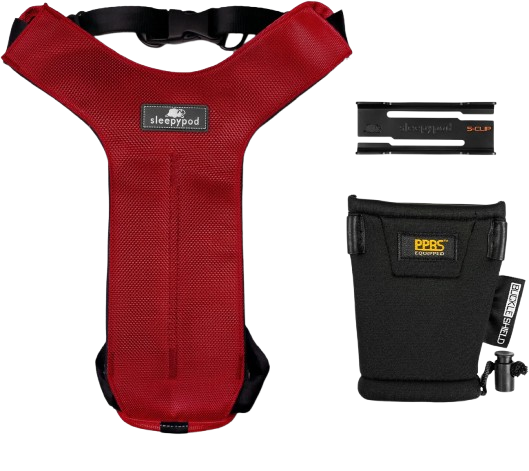
Sleepypod Clickit
CPS 5-Star Certified Dog Car Harness, Crash-Tested Protection for the Back Seat
Kurgo Tru-Fit
Kurgo’s claim has two parts, and they point in different directions. Kurgo’s testing methodology page says its Tru-Fit Enhanced Strength harness (version 3) and Impact harness were tested at Calspan’s Buffalo, NY facility in June 2018, using a procedure adapted from FMVSS 213, the child restraint standard. It lists pass criteria: staying within 32 inches of excursion for dogs up to 50 lb, 36 inches for dogs from 51 to 75 lb, and no complete separation of hardware or webbing. That is a specific, checkable claim from a real lab.
However, the CPS 2013 study found the earlier Tru-Fit Enhanced Strength did not meet its standard, reporting neck strap tearing and hardware deformation, with the small and large sizes meeting CPS’s definition of catastrophic failure. CPS’s page notes that Kurgo redesigned the product in 2018 and that CPS has not retested it. So the current version has a manufacturer-commissioned test, but no independent CPS result that we could find. The Kurgo Tru-Fit review looks at how it performs for owners and what it costs.
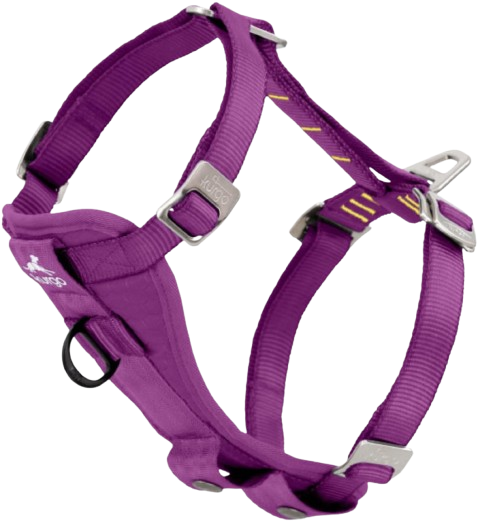
Kurgo Tru-Fit Harness
All-Steel Buckle Dog Harness, Padded Chest for Car Safety & Daily Walks
How to read the difference
If independent verification is your priority, Sleepypod has the stronger evidence. If budget matters and you accept a manufacturer-commissioned test in place of certification, Kurgo’s published method and criteria give you something to evaluate. Neither choice removes the need for correct fit and installation.
Installing It Properly
Even a well-tested harness needs correct use. Follow the manufacturer’s manual for your model, since routing differs between designs.
Keep your dog in the back seat. The AKC notes that dogs are better off in the back seat so that air bags can’t harm them, and Sleepypod describes its design as intended for the rear passenger seat.
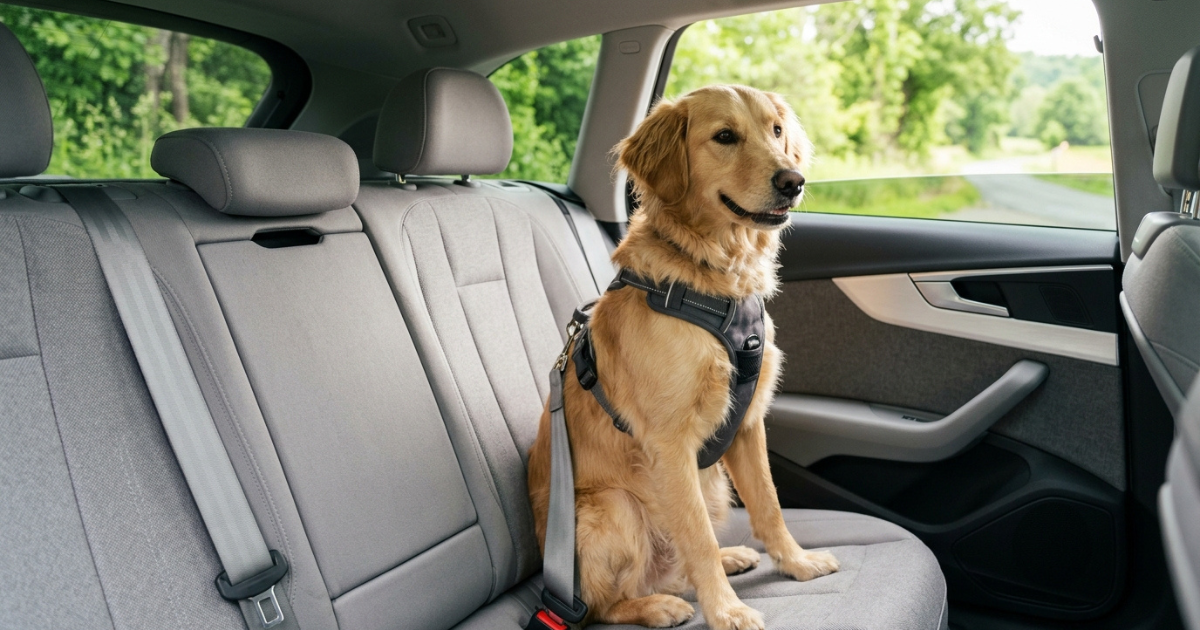
Connect the harness to the vehicle seatbelt rather than to your dog’s collar, which would send crash forces to the neck. Take up slack so the dog can’t build momentum, and check that the harness doesn’t twist or slip when pulled gently.
Don’t use a walking harness as a car restraint. Everyday harnesses aren’t built or tested for crash forces.
After a Crash or Heavy Wear
Sleepypod describes a Crash Replacement Program for its harnesses, which reflects the general principle that restraints used in a collision should be retired even if they look fine. If you have been in an accident with your dog buckled in, contact the manufacturer and ask what they advise.
Beyond accidents, inspect straps and stitching regularly for fraying, and replace any harness with damaged webbing, bent hardware, or a buckle that no longer latches firmly.
Common Mistakes
- Trusting packaging. “Crash tested” without a named lab, protocol, or weight range is marketing.
- Buying the wrong size. Certification applies to tested sizes, and a poor fit undermines it.
- Ignoring the version. Test results may belong to an older design.
- Using the front seat. Airbag deployment is a risk even with a good harness.
- Clipping to the collar. Always attach to a harness built for the purpose.
- Treating a harness as containment. It restrains but does not enclose, which is the trade-off against a crate.
FAQ
Does a “crash-tested” label mean a harness is safe? Not by itself. Look for who tested it, which model and size, and whether the result is an independent certification or the manufacturer’s own claim.
What is the Center for Pet Safety? It is a nonprofit that conducts independent crash testing of pet travel products and publishes the results, including the harness studies discussed above.
Is Kurgo Tru-Fit crash tested? Kurgo says the current Tru-Fit Enhanced Strength harness was tested at Calspan in 2018. CPS’s 2013 study found an earlier version failed its standard, and CPS has noted it has not retested the redesign.
Can a small dog use a car harness? It depends on the harness. Sleepypod lists its harnesses for dogs from 18 lb up, so very small dogs may be better served by a certified carrier secured with the seatbelt.
Can I use a regular walking harness in the car? No. Walking harnesses aren’t designed or tested for crash forces.
Should I replace a harness after a minor accident? Contact the manufacturer for guidance. Sleepypod has a replacement program for harnesses involved in crashes.
Sources: Center for Pet Safety 2011 Study, CPS 2013 Study, Kurgo Testing Methodology, Sleepypod Clickit Range, AKC