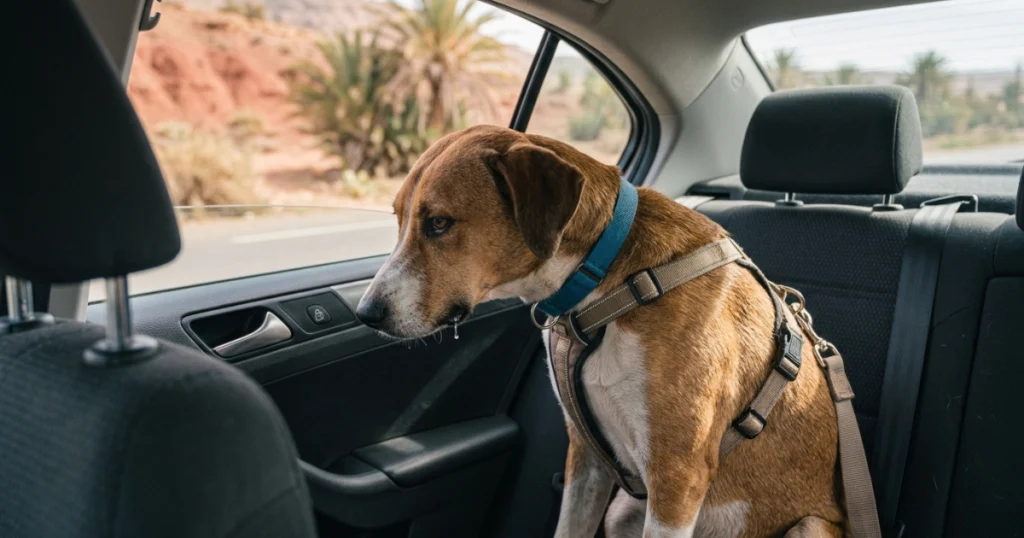
Traveling with a dog can be a wonderful experience, but for many pets, car rides bring stress rather than excitement. While some dogs happily jump into the vehicle, others become anxious, restless, or physically uncomfortable before the journey even begins.
Travel anxiety in dogs is a complex issue shaped by past experiences, motion sickness, environmental triggers, and individual temperament. Left unrecognized, it can gradually intensify, turning even routine trips into a source of stress for both dogs and their owners.
This guide walks through the most common causes of travel anxiety, the behavioral and physical symptoms to watch for, and when it’s time to bring in a veterinarian.
Key Takeaways
- Understand the most common causes of travel anxiety in dogs.
- Learn to recognize both behavioral and physical signs of stress.
- Identify the difference between excitement and genuine fear.
- Understand how untreated anxiety can affect long-term well-being.
- Know when professional veterinary support may be necessary.
Understanding Travel Anxiety in Dogs
Travel anxiety rarely comes from a single cause. It’s usually a mix of biology, past experience, and environment — which is exactly why two dogs can react so differently to the same five-minute drive.
Why Dogs Develop a Fear of Vehicles
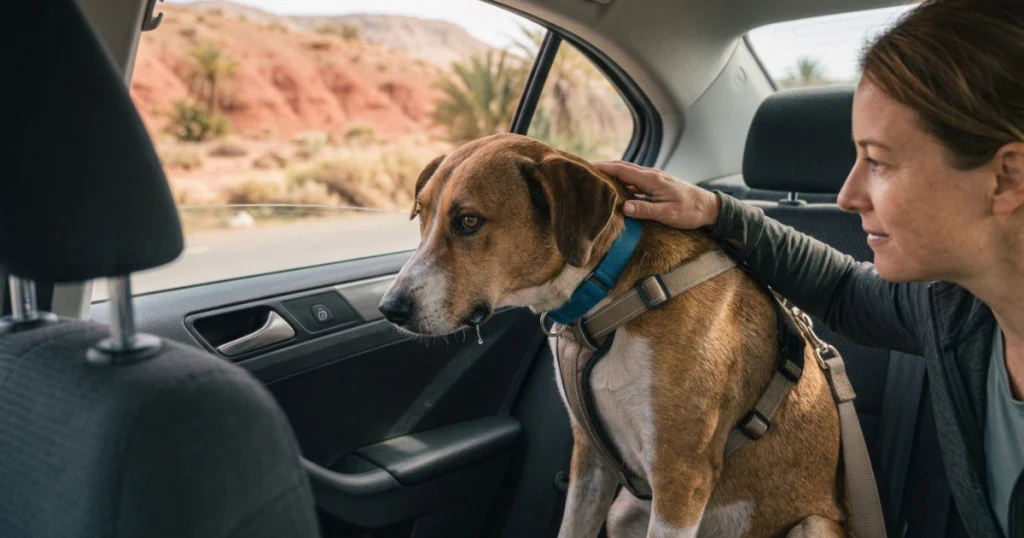
For many dogs, a car is unpredictable territory. Movement, engine noise, vibration, and constantly shifting scenery can overwhelm a sensitive dog that never had positive early exposure to riding. Without those good first experiences, the car stops being a gateway to fun outings and becomes something to dread instead.
Dogs also have zero control once a trip starts. That loss of control, combined with confinement in a moving space, can trigger a real stress response — pacing, whining, panting, or restlessness are all part of it.
The Role of Past Traumatic Experiences
Negative associations are one of the most common drivers of travel anxiety. A dog whose only car rides end at the vet’s office quickly learns to link the vehicle with something unpleasant.
Even a single bad moment — a hard brake, an episode of carsickness, a minor accident — can leave a lasting mark. Over time, incidents like these build a strong emotional link between “car” and “danger.” The good news is that new, low-stakes positive trips can gradually rewrite that association.
Genetic and Physical Predispositions
Sometimes the root cause isn’t emotional at all — it’s physical. According to VCA Animal Hospitals, motion sickness is more common in younger dogs because the balance-related structures of the inner ear aren’t fully developed yet, and most puppies outgrow it by around one year old. Veterinary sources also note that while any breed can be affected, Boxers, Border Collies, and Dachshunds appear more prone to it.
That physical nausea often becomes tangled up with the dog’s emotional experience of the car — the dog feels sick, and starts associating the sickness with the vehicle itself, even after the underlying physical cause has passed. Some dogs are also simply more anxious by temperament, in the car and everywhere else. Keeping this biological piece in mind can help you respond with patience rather than frustration.
Common Triggers and Causes of Canine Travel Stress
Canine travel stress usually comes from a pile-up of environmental factors that overwhelm a dog’s senses at once. For a dog unused to the road, the inside of a car can feel chaotic and impossible to predict.
Sensory Overload from Sight and Sound
Dogs process the world differently than we do, and the blur of trees, signs, and passing vehicles outside a window can be genuinely disorienting. Add engine noise, sirens, or road vibration on top of that, and you have a lot for a sensitive dog to filter at once.
When the input becomes too much, dogs often respond by trying to shrink away from it — hiding under a seat, refusing to settle, or pacing. Reducing outside noise and blocking the view (a window shade, a covered crate) can take a lot of that pressure off.
The Physical Discomfort of Motion Sickness
Beyond the psychological side, plenty of dogs are genuinely, physically ill in the car. Drooling, lethargy, and vomiting are the classic signs, usually caused by the inner ear struggling to reconcile “we’re not moving” with “we are clearly moving.”
Pacing or heavy panting early in a trip can be the first sign that nausea is building. It’s worth remembering this is a physiological reaction, not defiance or bad behavior — and catching it early can stop it from calcifying into a long-term fear of the car.
Lack of Familiarity with the Travel Environment
A car is unfamiliar ground: strange smells, tight quarters, no easy exit. That lack of control can make a dog feel trapped, which only adds to the unease.
Building a consistent “safe zone” inside the car — the same blanket, the same crate, familiar scents — can go a long way toward turning the vehicle into something closer to a den than a trap.
| Trigger Type | Primary Impact | Common Behavioral Sign |
|---|---|---|
| Visual motion | Sensory overload | Restlessness |
| Inner ear imbalance | Physical nausea | Excessive drooling |
| Unfamiliar space | Psychological fear | Panting or whining |
| Confinement | Loss of control | Pacing, trying to hide |
Identifying the Signs of Anxiety During Car Rides
Dogs usually signal discomfort long before it turns into full-blown panic. Catching those early signals is the difference between a quick pull-over and a genuinely distressing ride.
Subtle Behavioral Cues to Watch For
Before things get obvious, most dogs show small tells first: repetitive lip licking, frequent yawning, an inability to settle. If your dog is pacing or constantly shifting weight, that’s discomfort talking.
Some dogs will also show “whale eye” — the whites of the eyes becoming visible as they scan the environment with tension. Catching these small shifts early gives you the chance to pull over and reset before things escalate.
Physical Symptoms of Acute Stress
As stress builds, the body takes over: heavy panting even in a cool cabin, excessive drooling (often tied to motion sickness), trembling, a tucked tail, or ears pinned back. These are involuntary signals that the dog’s nervous system has decided the environment isn’t safe.
Distinguishing Between Excitement and Genuine Fear
Excitement and fear can look similar at a glance, so it’s worth knowing the difference. An excited dog heading to the park usually has a loose, wiggly body and a wagging tail, and stays focused on the destination rather than the car itself.
Genuine fear looks different: a rigid posture, no interest in treats or toys, avoiding eye contact, or trying to disappear under the seat. Telling these apart shapes how you should respond — comfort and reassurance for fear, calm redirection for over-excitement.
Travel Anxiety vs. Motion Sickness: What’s the Difference?
The two often show up together, but they’re not the same thing. Motion sickness is a physical reaction — drooling, nausea, vomiting, lethargy. Travel anxiety is emotional — panting, whining, trembling, pacing, or resisting getting in the car at all.
Preventive Vet notes that the clearest way to tell them apart is often timing: a dog with pure motion sickness typically settles quickly once the car stops, while an anxious dog can stay distressed well after the ride ends. They’re also often linked — a dog that gets carsick repeatedly can start associating the car with feeling awful, and what began as a physical problem turns into an emotional one.
Because the two conditions call for different solutions, it’s worth involving a veterinarian if symptoms are frequent, severe, or interfering with normal life. Preventive Vet also points out that a vet visit is useful for ruling out medical issues that can mimic these symptoms, like arthritis, a slipped disc, or an inner ear infection.
How Travel Anxiety Can Affect Your Dog
The impact isn’t limited to the ride itself. Dogs that repeatedly go through stressful travel can build stronger and stronger negative associations with vehicles over time.
Mild nervousness left unaddressed can turn into outright avoidance — refusing to get in the car, panicking at the sight of a leash or carrier, or showing distress before a trip has even started.
That chronic stress doesn’t stay contained to travel days, either. It can make vet visits, grooming appointments, and family trips progressively harder to manage.

When to Seek Professional Help
For some dogs, this goes beyond occasional nerves and becomes a real welfare issue. When anxiety starts affecting your dog’s safety, comfort, or quality of life, it’s time to bring in a professional.
A veterinarian can help determine whether what you’re seeing is anxiety, motion sickness, an underlying medical condition, or some combination of the three — and each of those calls for a different plan, from behavior-modification techniques to, for some dogs, anti-anxiety medication.
Signs worth flagging to your vet include persistent anxiety that isn’t improving, extreme panting, excessive drooling, uncontrollable trembling, repeated vomiting, or attempts to escape the vehicle. A proper veterinary assessment can rule out medical causes, pinpoint triggers, and set your dog up with a plan to travel more safely and comfortably.
Why Early Recognition Matters
The earlier travel anxiety gets noticed, the easier it is to manage. Mild stress is far more workable than a fear response that’s had months or years to set in.
Paying attention to the small warning signs — and acting on them early — helps prevent a bad experience from calcifying into a lasting behavioral problem, and gives your dog a real shot at building positive associations with travel instead.
Conclusion
Travel anxiety affects dogs of every age, breed, and personality. Understanding the causes, spotting the early warning signs, and identifying your dog’s specific triggers are the first real steps toward protecting their emotional well-being.
Left unaddressed, it tends to get worse, not better, making even routine trips harder over time. But with early recognition and the right support, most dogs can build healthier associations with travel and experience significantly less stress along the way.
Every dog is different — getting to know your own dog’s specific triggers is usually the fastest path to calmer, safer, more enjoyable trips for everyone in the car.
Not sure where to start? Take a look at our calming solutions for anxious travelers — training support, comfort gear, and vet-guided recommendations to help your dog feel safe on every ride.
FAQ
Can travel anxiety get worse over time?
Yes. Left unaddressed, mild nervousness can develop into a stronger fear response, with dogs becoming increasingly resistant to entering the car and showing more intense stress on every trip. Early recognition and intervention help prevent it from becoming a long-term behavioral issue.
Are certain dogs more likely to experience travel anxiety?
Dogs that are naturally sensitive to new environments and loud noises, puppies with limited socialization, dogs with a history of bad travel experiences, and dogs prone to motion sickness all tend to be at higher risk.
Can travel anxiety affect a dog’s physical health?
Yes. Ongoing stress can show up physically — excessive panting, drooling, digestive upset, vomiting, fatigue — and in severe cases can affect a dog’s broader well-being and make necessary travel harder to manage.
Can motion sickness cause travel anxiety in dogs?
Yes. Dogs that repeatedly feel nauseous or sick in the car can start associating travel with discomfort, and that association can turn into genuine anxiety over time.
Can puppies develop travel anxiety?
Yes, especially if their early car rides are stressful or overwhelming. Short, positive, gradual exposure during puppyhood is one of the best ways to build confidence and head off travel-related fear later on.
Can dogs outgrow travel anxiety?
Some dogs improve naturally through positive experiences and gradual exposure. Severe anxiety, however, rarely resolves on its own and usually needs consistent training, environmental changes, or professional guidance.
Can travel anxiety develop suddenly?
Yes. A dog that traveled comfortably for years can suddenly develop anxiety after a frightening event, an accident, the onset of motion sickness, illness, or age-related changes. Identifying the trigger is key to addressing it before it becomes long-term.
Sources: VCA Animal Hospitals, Preventive Vet