Some dogs shake before you’ve even opened the car door. Others seem fine right up until the engine turns over, then pant and won’t settle for the whole ride. This dog travel training plan is built for both — a week of short, deliberately boring practice that gives your dog’s nervous system time to catch up, instead of one dramatic breakthrough that never comes.
Here’s a day-by-day plan for exactly that: seven days, each one raising the bar slightly while keeping things calm enough that your dog never tips into real panic. It works for a dog that freezes at the open door, one that’s fine until the engine starts, or one that’s simply never learned that car rides can be uneventful.
Key Takeaways
- Small, low-stakes steps over a week beat one big, overwhelming drive.
- Rule out motion sickness first — it can look like fear but needs a different fix.
- Reward calm behavior with well-timed treats, not forced exposure.
- Signs like trembling, refusal, or vomiting mean slow down, not push through.
- Some dogs need two passes through the plan, or professional support — that’s normal, not failure.
Why a Week of Small Steps Beats One Big Drive
Whatever’s behind your dog’s travel anxiety — a bad past experience, limited early exposure, or general sensitivity — jumping straight into a real drive tends to backfire. It confirms to your dog that the car is exactly as bad as they feared, and next time they’ll resist harder. Small, controlled steps do the opposite: each calm rep quietly proves that the car isn’t actually dangerous.
This is the same idea behind gradual exposure training generally — introduce the trigger at an intensity your dog can handle, then increase it only once they’re relaxed at the current step. By day seven, most dogs are noticeably calmer around the car. Dogs with more entrenched anxiety may need to run through the plan twice, and that’s not a failure — some dogs just need more reps at each stage before it sticks.
One thing worth ruling out first: if your dog shows real panic, aggression, or gets sick on nearly every ride, talk to your vet before assuming this is purely behavioral. Motion sickness can look a lot like fear from the outside, and it needs a different fix — sometimes medication, sometimes just an empty stomach and better ventilation, not more desensitization.
What You’ll Need
- Small, soft, high-value treats your dog can eat in one bite
- Their regular harness, seatbelt clip, or travel crate — ideally a crash-tested one if you’re shopping for a new harness anyway
- A blanket or toy that already smells like home
- A way to jot down how each session went, even just a note on your phone
A consistent way to mark the exact moment your dog does something right — a clicker, or just a calm “yes” — makes a real difference here. Timing matters more than most people expect: praise that lands two seconds late rewards whatever your dog is doing then, not the calm moment you meant to reinforce.
Keep every session short. Five relaxed minutes beats twenty stressful ones, every time.
Day 1: Make the Car a Safe, Boring Place
Goal: a neutral or positive association with the car, engine off, full stop.
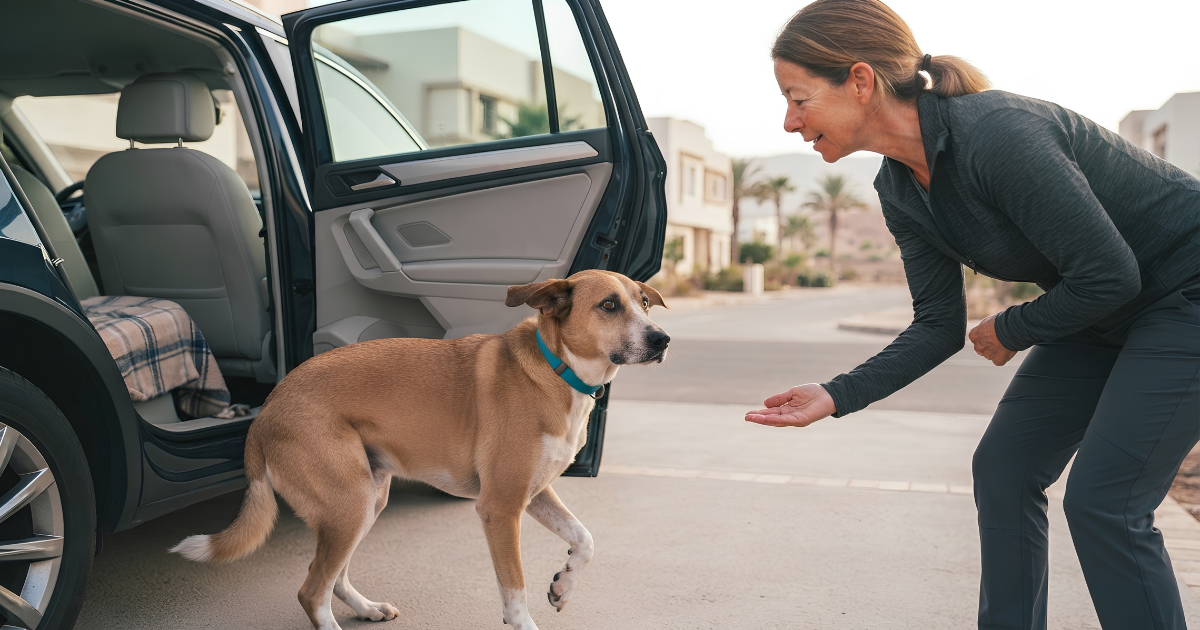
- Open the doors and let your dog explore at their own pace
- Scatter a few treats on the seat or floor
- Sit inside together for 2–5 minutes
- End before any sign of stress shows up, even if that means the session only lasts thirty seconds
- Mark and reward calm moments, then close with a short walk away from the car
Watch for panting, pacing, or an attempt to jump back out. If you see any of that, tomorrow’s session should be shorter than today’s, not the same length.
Day 2: Introduce Engine Sound and Vibration
Goal: get your dog used to the engine without any actual movement.
- Repeat Day 1, then start the engine while still parked
- Let your dog sit calmly for 1–3 minutes with it running
- Pair the sound with treats and a relaxed tone of voice
- Turn the engine off before your dog reacts — you’re ending on calm, not testing how much they can take
If they stayed relaxed the whole time, a second short session later in the day is fine.
Day 3: The First Short Drive
Goal: an actual drive — brief, smooth, and low-stakes.
- Secure your dog as usual: harness, seatbelt clip, or crate
- Drive around the block, maybe 2–5 minutes
- Gentle acceleration, no sharp turns or hard stops
- A calm, steady voice helps some dogs; others do better with quiet
- Arriving home again is a perfectly fine “destination” for this stage
Skip a full meal right before this one — a light meal a few hours earlier lowers the odds of nausea, and it also makes it easier to tell motion sickness apart from anxiety if something goes wrong.
Day 4: Add Duration and a Familiar Item
Goal: slightly longer, with extra comfort cues.
- Bring the blanket or toy from home into the car
- Drive around 10 minutes, ideally somewhere with light, predictable traffic
- A treat at the halfway point if your dog is still relaxed
- If you’re planning to try a pheromone spray or a pressure wrap, today’s a reasonable day to introduce it — that way you can actually tell what’s helping, rather than changing three things at once
Day 5: Drive Somewhere Fun
Goal: break the “the car only ever means the vet” association a lot of dogs form.
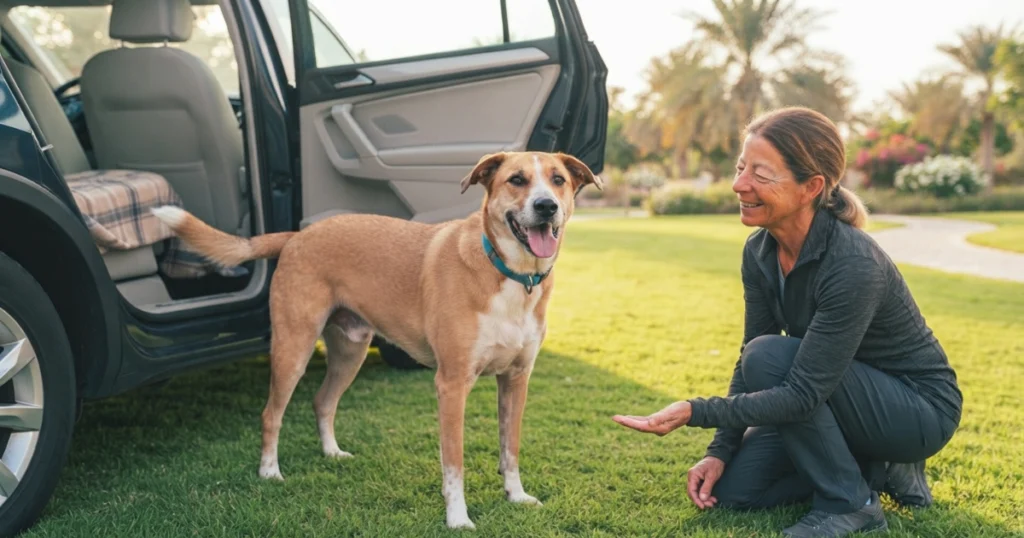
- Pick a short drive to somewhere your dog genuinely likes — a park, a friend’s yard, a quiet trail
- Let the destination itself be the reward: play, a sniff walk, whatever they love
- Keep the drive itself calm and unremarkable, same as the earlier days
- Head home while they’re still having a good time, before they get overtired
This is often the day it clicks — dogs start expecting good things instead of just tolerating the ride.
Day 6: Rehearse Real-World Details
Goal: the small logistics of an actual trip, not just the driving.
- Practice calm entry and exit at both ends of the drive
- If your dog rides in a crate, load and secure it exactly as you would for real
- Stretch the drive to 15–20 minutes
- Add one small realistic wrinkle — light traffic noise, a drive-through stop, a brief stop with the engine off
Pay attention to which specific moments — stopping, starting, getting in, getting out — still cause tension. Those are worth a few extra reps before you move on.
Day 7: The Full Trial Run
Goal: simulate the actual trip you’re preparing for.
- Follow your normal pre-travel routine: light meal, bathroom break, a bit of exercise beforehand
- Drive close to your real trip’s length, or 20–30 minutes if nothing specific is planned yet
- Bring what you’d actually pack — water, bedding, treats, whatever calming tool worked earlier in the week
- Notice how this session compared to Day 6: calmer, about the same, or worse
A good Day 7 means your dog is likely ready for the real thing. A rough one just means you’ve learned something — repeat Days 5 and 6 a few more times before pushing further.
Signs You’re Moving Too Fast
Slow down or repeat the previous day if you notice:
- More drooling, panting, or trembling than in earlier sessions
- Refusal to get in the car at all
- Vomiting or other signs of motion sickness
- Trying to escape the harness, crate, or car itself
Pushing through these tends to erase progress rather than build it. Spending two or three days on one step is common, not a sign anything’s going wrong.
What Tends to Derail This
Skipping ahead. Jumping to Day 5 or 7 without the earlier steps almost never sticks.
Long drives too soon. This is the single most common reason dogs backslide.
Punishing the stress signals themselves. Whining or pacing is communication, not defiance — punishing it just adds fear on top of what’s already there, which is why the American Veterinary Society of Animal Behavior in favor of reward-based training like this.
Training on a full or completely empty stomach. Either one can trigger nausea and muddy your read on what’s actually going on.
When to Get Professional Support
Some dogs need more than a structured week. Get your vet or a certified behaviorist involved if your dog:
- Has panic-level reactions — frantic escape attempts, prolonged shaking, loss of bladder or bowel control
- Gets sick on nearly every car ride even with gradual training
- Has ever tried to bite or hurt themselves out of fear during travel
- Shows no improvement at all after two full passes through this plan
A vet can rule out underlying medical issues and, if it makes sense, talk through anti-nausea medication, anti-anxiety medication, or a referral to a veterinary behaviorist.
Need tools to go with the plan? Check out our calming solutions for travel anxiety — calming aids, travel gear, and training essentials to support each stage of this week.
FAQ
Do I have to follow the days in exact order?
Not rigidly — but don’t skip steps. If your dog isn’t relaxed on a given day, repeat it instead of moving on.
What if my dog is fine with a parked car but panics once it starts moving?
Spend extra time on Day 2, and make Day 3’s first drive even shorter than suggested. Thirty seconds around the driveway can count as a real first success.
Can I use this plan for puppies?
Yes — early, low-key exposure like this is one of the better ways to prevent car anxiety from developing in the first place. Just keep sessions even shorter than described here.
My dog was doing great, then had a bad day. What happened?
Normal. A loud noise, a rough patch of road, or just an off day can cause a temporary dip. Go back one day in the plan and pick up from there.