
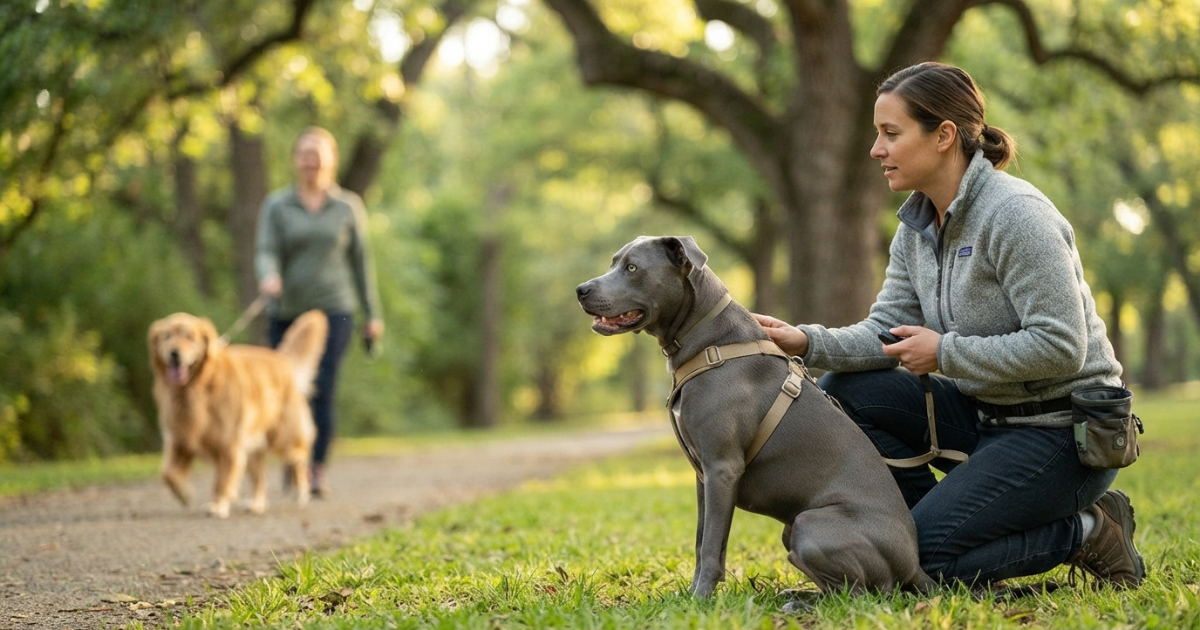
If your dog shows fear, stress, or reactivity around things like other dogs, strangers, loud noises, or grooming, this is often a sign that they’re overwhelmed — not disobedient.
Gradual exposure training for dogs is a structured, gentle approach that helps dogs overcome fear by slowly introducing them to what scares them, in a safe and controlled way. Instead of pushing your dog into stressful situations, this method starts at a very low intensity where your dog can still feel safe, then increases step by step as confidence builds. It’s the technique behind nearly every trigger-specific guide on this site, including our guide on treating separation anxiety in dogs — this is the deep dive into the method itself.
In this guide, you’ll learn how to:
- Identify your dog’s fear triggers
- Understand your dog’s comfort limits (threshold)
- Apply gradual exposure in a safe, step-by-step way
- Help your dog become more confident in real-life situations
By the end, you’ll have a clear, practical system to help your dog reduce fear and feel more relaxed in everyday situations.
Key Takeaways
- Gradual exposure training helps reduce fear and anxiety safely.
- Staying below threshold is essential for successful training.
- Identifying triggers helps you build a more effective plan.
- Small, consistent steps lead to long-term behavioral improvement.
- Patience and consistency matter more than speed.
Understanding Dog Anxiety and Fear
Before starting structured exposure work, it helps to understand how fear and stress actually show up in your dog’s behavior. Anxious or overwhelmed dogs show clear reactions when they face something outside their comfort zone — recognizing those early signals is exactly what lets you apply gradual exposure correctly, keeping your dog calm and within a manageable level of stress.
Common Signs of Stress During Exposure
When a trigger feels too intense, watch for:
- Barking
- Pacing or restlessness
- Whining
- Shaking or trembling
- Avoidance or trying to escape
- Hiding behind you or objects
- Destructive or impulsive behavior
- Sudden, unpredictable reactions
Causes of Anxiety and Fear in Dogs
Anxiety usually comes from a mix of underlying factors — separation issues, past experiences, lack of socialization, genetics, environmental stress, or medical conditions. These shape how sensitive a dog is to a given situation and how strongly they react during training, which is exactly why understanding the cause helps you approach exposure more carefully and avoid overwhelming your dog.
How Gradual Exposure Training for Dogs Works
Exposure-based training introduces fear triggers slowly and at a manageable intensity, so your dog can stay calm while learning. Instead of placing a dog directly into a stressful situation, the trigger is shown at a low intensity that doesn’t overwhelm them, then gradually increased as comfort grows — building confidence step by step and reducing fear-based reactions in a structured way.
The core principle: keep your dog below their emotional threshold during every session, so learning can happen without tipping into panic.
This method applies to a wide range of situations: separation anxiety, leash reactivity, noise phobias like thunderstorm fear, and social anxiety around strangers. Consistency matters most — progress takes time, but gradual improvement tends to be more stable and longer-lasting than a quick fix.
The Science Behind Gradual Exposure Training
This approach is grounded in behavioral learning principles: triggers are introduced in a controlled, progressive way and paired with positive experiences, letting a dog slowly build confidence instead of fear. Over time, the dog learns that the trigger’s presence doesn’t always predict something bad, which reduces the emotional reaction itself — not just the visible behavior.
The AKC recommends the same core method: get your dog below threshold, pair that exposure with something they genuinely love, and only increase intensity once they’re consistently comfortable at the current level. Change happens gradually, through repeated positive experiences — not in a single session.
Identifying Your Dog’s Fear Triggers
Before starting, figure out what specifically sets your dog off. Common triggers include other dogs, strangers, children, bicycles, cars, or certain environments — every dog is different, so knowing yours shapes how you plan sessions.
A simple behavior log helps. Track:
- What triggered the reaction
- How strong the reaction was
- The environment at the time
- Your dog’s emotional state beforehand
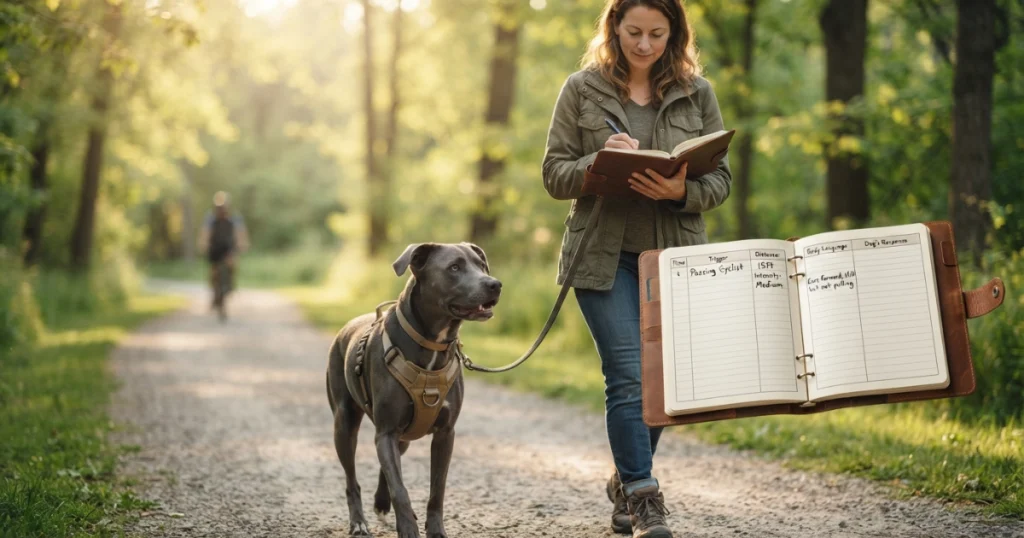
This record makes it much easier to design sessions that stay within your dog’s comfort level and support steady progress.
Keeping Your Dog Below Threshold During Training
Staying below threshold is the single most important principle here — exposing your dog to a trigger at a level where they notice it without becoming overwhelmed or reactive. If your dog is afraid of other dogs, for example, training might start at a distance where they can see another dog and stay calm and relaxed.
Once a dog goes above threshold, learning becomes difficult — fear takes over, and they can no longer focus or respond normally.
How to Recognize Threshold Levels
Below threshold (calm state): relaxed body language, loose posture, able to eat treats and stay focused
Above threshold (stress state): barking or lunging, panting or pacing, stiff posture, spinning or inability to focus, refusing food
Keeping Your Dog Calm During Training
- Start at a distance where your dog feels safe
- Reduce distance very slowly, over time
- Reward calm behavior consistently
- Keep sessions short and controlled
Step-by-Step Guide to Gradual Exposure Training
This example uses a dog reactive to other dogs, but the same structure applies to most triggers.
Step 1: Start at a Safe Distance. Position your dog where they can see another calm dog without becoming reactive — around 20 feet is a reasonable starting point. The moment they notice the trigger while staying calm, reward immediately. Stop rewarding once the trigger is gone.
Step 2: Build Positive Association. Repeat consistently so your dog starts associating the trigger’s presence with something good — the goal is for them to learn “seeing another dog means good things happen.”
Step 3: Reduce Distance Gradually. Once your dog stays calm and starts anticipating rewards, decrease the distance in small steps — only move closer when they remain relaxed and responsive.
Step 4: Introduce Controlled Variations. Once comfortable at close distance, reintroduce small changes: slight movement from the other dog, returning to a longer distance and repeating the process, or gradually increasing difficulty. This strengthens learning and helps prevent regression.
Step 5: Reinforce Calm Behavior. Keep rewarding calm responses — looking at the trigger then back at you, taking treats while the trigger is present, staying relaxed at closer distances. These small wins are real signs of progress, and rewarding them consistently is one of the core principles of positive reinforcement training.
Important: this process should always move slowly. Rushing can overwhelm your dog and set progress back. Depending on sensitivity, gradual exposure can take weeks or even months — that’s normal, not a sign it isn’t working.
Tools and Rewards to Enhance Exposure Training
Selecting High-Value Rewards
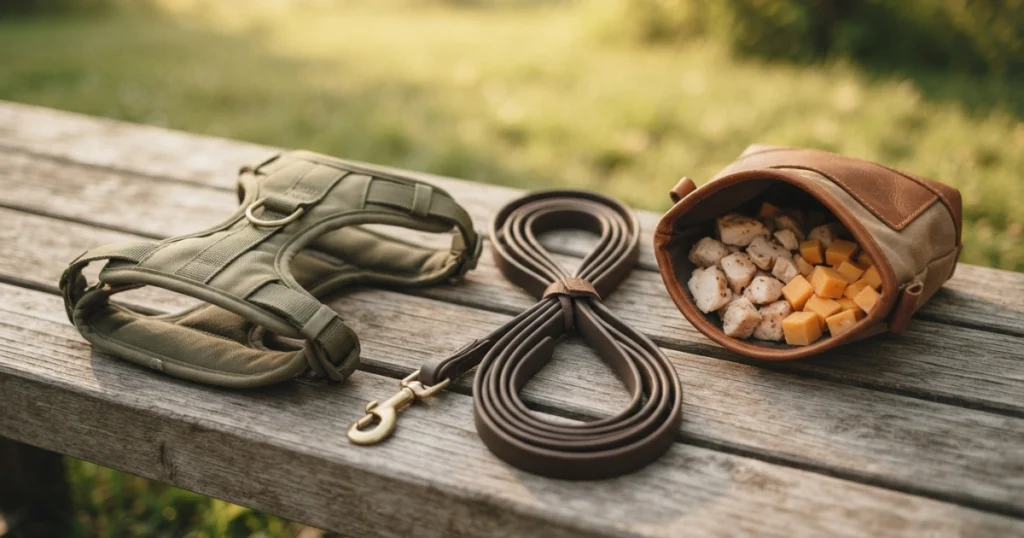
The most effective reward is simply something your dog genuinely enjoys — a favorite treat, toy, or activity. Reserve your highest-value rewards for the more challenging steps, and adjust based on what actually motivates your specific dog.
Training Aids and Equipment
- Front-clip harnesses for better leash control
- Head halters for dogs that need extra guidance
- Long lines for maintaining safe distances during sessions
These tools support gradual exposure — they don’t replace it.
Managing Setbacks and Plateaus During Training
Setbacks are a normal part of this process, not a sign that training is failing. Changes in routine, stress, health, or environment can all affect progress. If your dog struggles during a session, return to a level where they previously felt comfortable — that prevents frustration and keeps learning at a manageable pace.
Progress is rarely linear. Some dogs improve quickly; others need more time before you see real change.
To manage setbacks:
- Accept that occasional setbacks are part of the process
- Return to an easier level when needed
- Keep sessions calm, consistent, and positive
- Watch your dog’s emotional state closely
- Celebrate small signs of progress
Environmental Management Strategies
Creating Safe Spaces
A quiet area where your dog can relax and recover from stressful moments makes a real difference. A simple setup: a quiet room or corner away from distractions, comfortable bedding and familiar toys, and free access whenever your dog needs it. Dogs learn more effectively when they feel safe, not overwhelmed.
Managing Triggers During Walks
Outdoor environments are unpredictable, so plan ahead:
- Walk during quieter times of day when possible
- Choose routes with enough space to maintain distance from triggers
- Stay aware of your surroundings to avoid surprises
- Have a backup route ready if a trigger becomes too intense
A well-managed environment doesn’t replace training, but it makes gradual exposure easier by cutting unnecessary stress and helping your dog feel more confident throughout.
When to Seek Professional Help
Most dogs benefit from this kind of training at home, but some situations call for professional guidance to stay safe and keep progress steady. Consider it if:
- Your dog shows aggressive behavior toward people or other animals
- Reactivity keeps worsening despite consistent training
- Fear or anxiety significantly affects daily life
- You’re unsure how to progress safely
A qualified dog trainer or behavior professional can assess your dog’s specific situation and build a structured plan around it. Seeking help isn’t a setback — expert guidance can make gradual exposure safer and more effective for both of you.
Conclusion
With patience, consistency, and the right approach, gradual exposure training can transform fear into confidence over time. Introducing triggers at a manageable level and progressing at your dog’s pace creates real opportunities for positive learning without ever overwhelming them.
Progress isn’t always linear, and some dogs need more time than others — but staying below threshold, celebrating small wins, and keeping a supportive environment make a real difference. Every dog learns at their own pace, and with consistent practice — and professional guidance when needed — most dogs can feel safer and more confident in everyday situations.
Want tools to support the process? Explore our calming solutions for separation anxiety — training aids, calming products, and enrichment tools to pair with gradual exposure.
FAQ
How long does gradual exposure training take for dogs?
It varies with fear level, trigger, and consistency. Some dogs improve within a few weeks; others need several months.
Can gradual exposure training work for reactive dogs?
Yes — it’s commonly used to help reactive dogs get more comfortable around triggers like other dogs, strangers, or busy environments. The key is staying below threshold and progressing slowly.
How often should I practice gradual exposure training?
Short, consistent sessions tend to beat long ones — regular practice builds confidence while lowering the risk of overwhelming your dog.
What are the best rewards for gradual exposure training?
High-value options — chicken, cheese, or your dog’s favorite treat — tend to work best. It should be something your dog finds genuinely motivating, not just acceptable.
Can gradual exposure training help with fear of other dogs?
Yes — it’s frequently used for exactly this, introducing another dog at a safe distance and gradually closing that distance over time.





