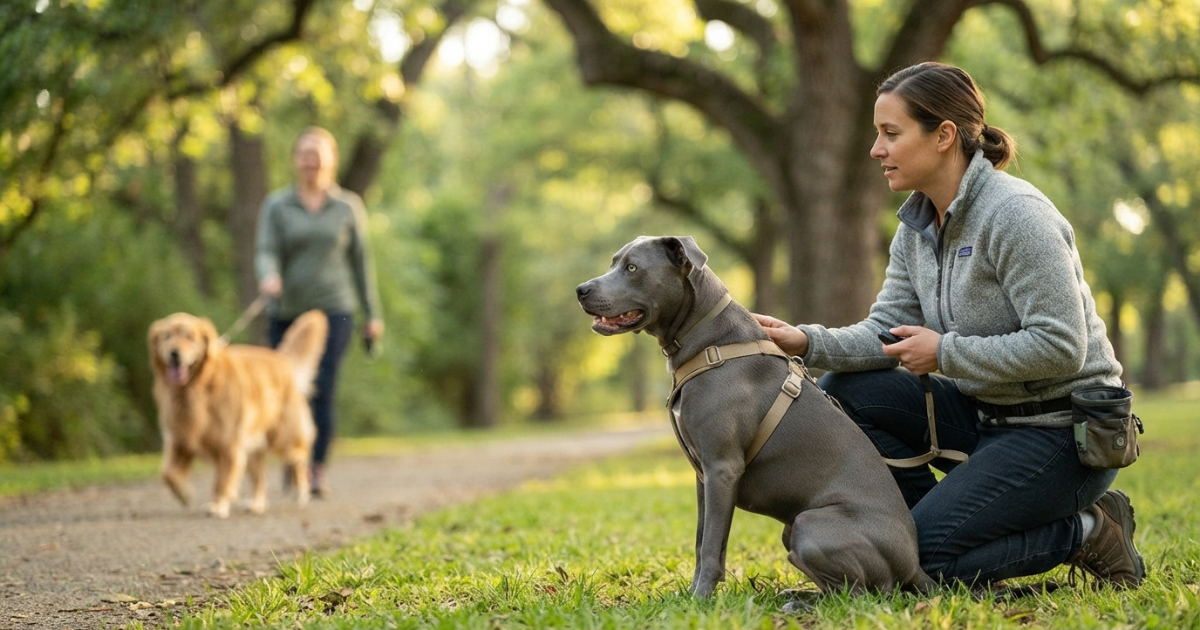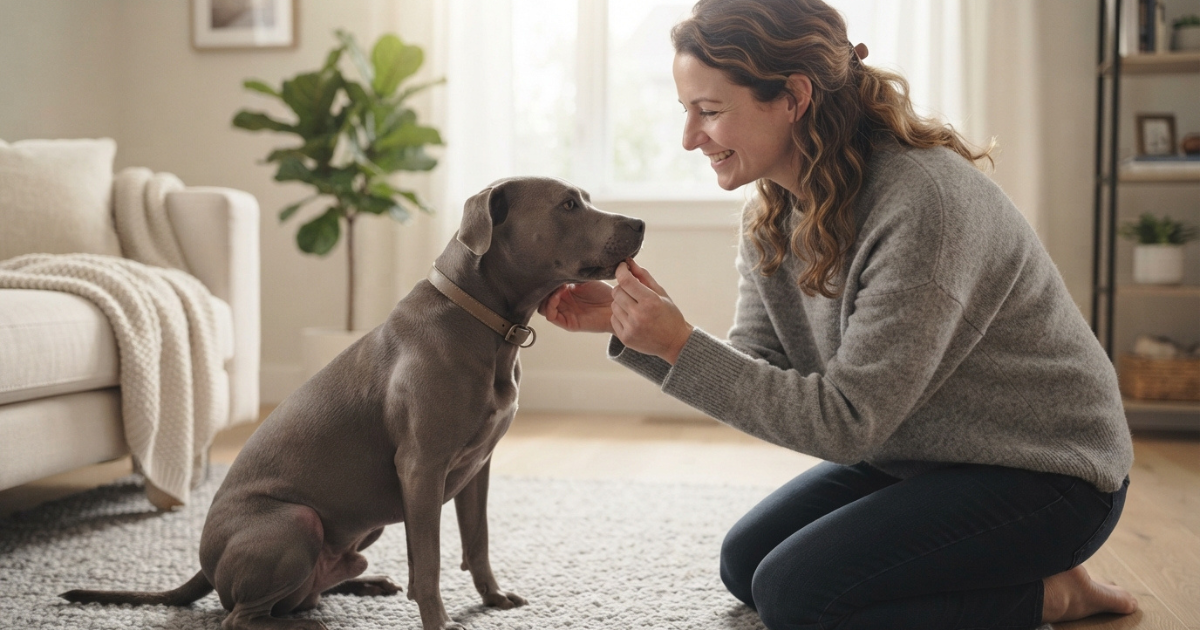
Positive reinforcement is one of the most effective and humane ways to improve a dog's behavior and reduce anxiety. Instead of punishing unwanted actions, this approach rewards calm behavior, helping dogs build confidence, trust, and emotional stability over time.
Professional trainers rely on it widely because it encourages long-term learning without fear or stress.
Positive reinforcement means rewarding the behaviors you want your dog to repeat.
When a dog associates a specific action with a positive outcome — a treat, praise, or play — it naturally becomes more likely to repeat that behavior.
Over time, this method helps develop:
● Calm and balanced behavior
● Improved focus and responsiveness
● Stronger trust between you and your dog
Read the Complete Guide → Positive Reinforcement Techniques for Anxiety in Dogs ↴
Reward Desired Behavior Immediately
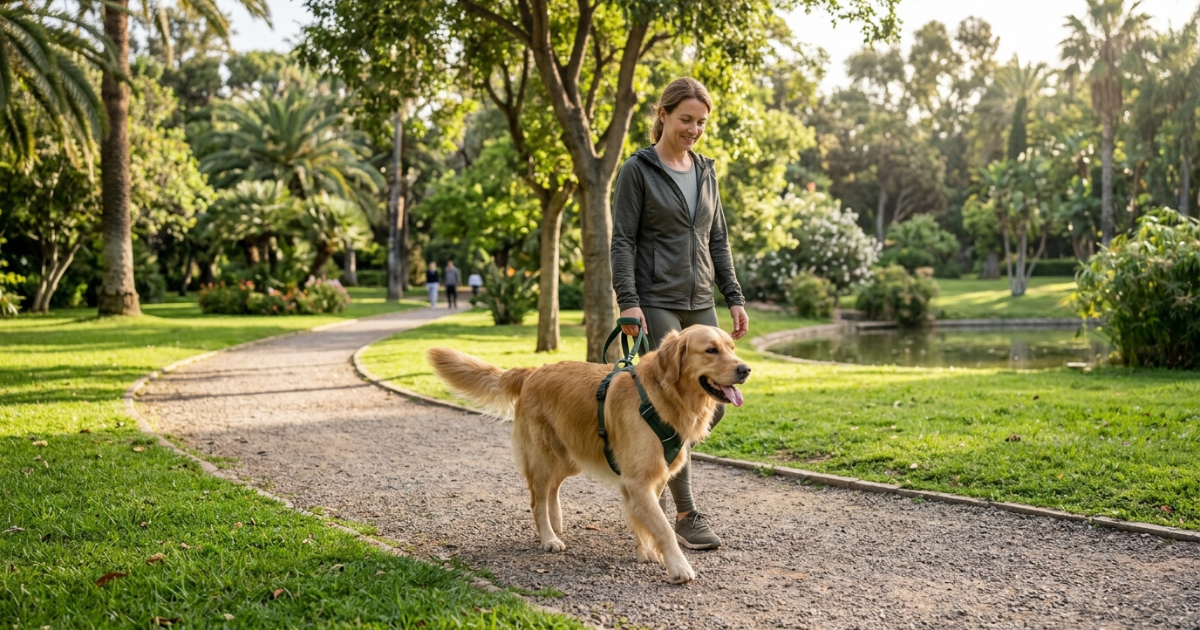
Reinforce your dog the moment they show the behavior you want — staying quiet instead of barking, remaining calm when left alone, or walking politely on a leash. Immediate rewards make the connection clear and speed up learning.
Use High-Value Rewards
Not all rewards carry the same weight. Choose what motivates your dog most: food treats, verbal praise, or a favorite toy. Higher-value rewards create stronger reinforcement, especially in challenging situations.
Master Your Timing
Timing is one of the most important factors in training success — rewards should come within seconds of the behavior. A delayed reward risks reinforcing the wrong action, so accurate timing leads to faster, clearer learning.
Focus on calm, stable behaviors — especially ones linked to stress or anxiety.
Prioritize reinforcing:
● Quiet behavior at night (reducing barking)
● Calmness when alone (separation-related stress)
● Relaxed behavior during travel
● Settling without seeking constant attention
Reinforce calm states—not excitement, tension, or panic.
● Reinforcing the wrong behavior — giving attention to barking, whining, or anxious behavior can unintentionally encourage it.
● Inconsistent reinforcement — rewarding a behavior sometimes but not always creates confusion and weakens learning.
● Relying on punishment — punishment increases fear and anxiety and often makes behavior problems worse over time.
Positive reinforcement helps reduce anxiety, excessive barking, travel stress, and attention-seeking behavior, while improving focus, confidence, and calm behavior. With consistent rewards and clear communication, dogs learn faster and build healthier long-term habits.
Positive reinforcement works best when applied consistently in everyday situations:
● Your dog stops barking → reward immediately
● Your dog stays calm when you leave → reinforce the calm state
● Your dog relaxes during a car ride → reward the relaxation
● Your dog lies down quietly → acknowledge and reinforce it
Small, consistent rewards lead to significant long-term progress. With patience and consistency, positive reinforcement can create lasting behavioral improvements and help your dog feel calmer, safer, and more confident every day.
•≫ For best results, pair positive reinforcement with a clear training structure:
● Step-by-Step Guide to Gradual Exposure Training
● Build a consistent daily routine →
Consistency and structure turn good training into lasting results.