
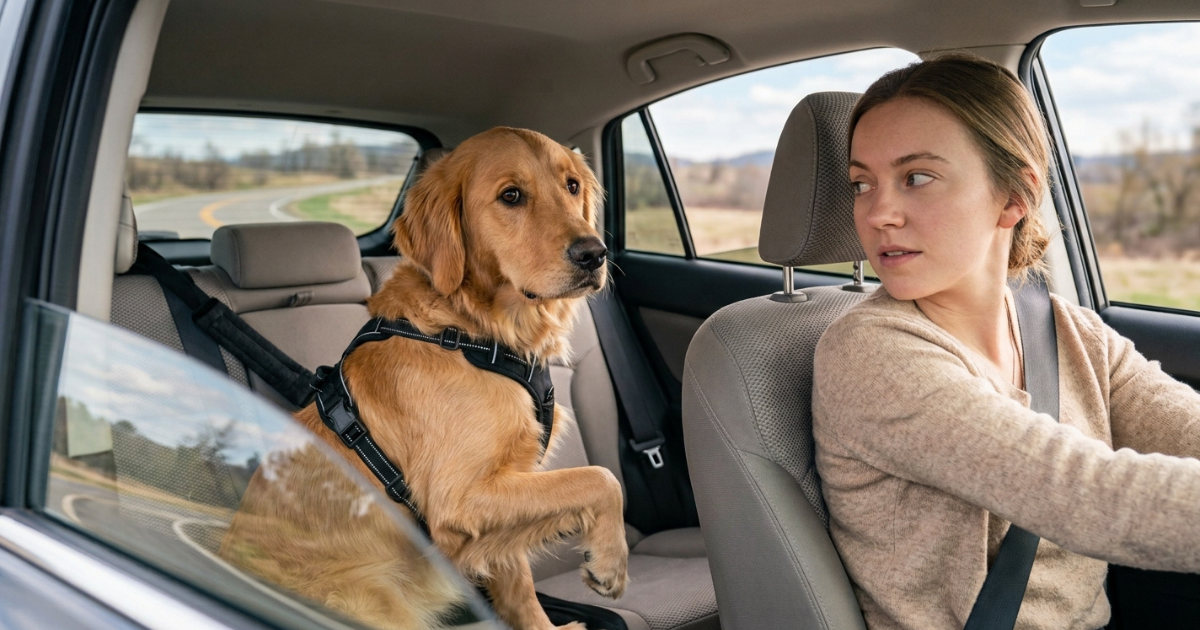
Travel anxiety in dogs is a behavioral and emotional stress response triggered by movement, unfamiliar surroundings, or a break in routine. It reflects a dog's sensitivity to change, not disobedience or a training failure.
This type of anxiety commonly shows up during:
● Car journeys, from short errands to long road trips
● Air travel and crate confinement
● Exposure to new environments, such as hotels, boarding facilities, or unfamiliar homes
Because dogs rely on consistency and familiar cues to feel secure, sudden changes in environment can create uncertainty. Without preparation, even routine travel can feel overwhelming to a sensitive dog.
Learn more about the psychology of travel anxiety in dogs ↴
Recognizing early signs of dog travel stress helps prevent escalation and makes the experience smoother for both of you. Many of these symptoms appear before the trip even begins — often as soon as your dog sees the car, the crate, or you packing a bag.
Common signs of travel anxiety in dogs include:
● Excessive barking or whining
● Heavy panting or drooling
● Restlessness or constant pacing
● Trembling or shakingVomiting or motion sickness
● Attempts to escape the car, crate, or carrier
Early recognition of these cues lets you intervene before stress builds into panic.
Note: If your dog shows repeated vomiting, extreme panic, aggression, or self-injury during travel, these can be signs of a more serious issue. Consult a veterinarian or certified dog behaviorist before your next trip rather than relying on home remedies alone.
Understanding the root cause of your dog's car anxiety is key to treating it effectively rather than just managing symptoms.
Common causes include:
● Motion sickness — physical discomfort that creates a lasting negative association with car rides
● Lack of early exposure — dogs never gradually introduced to travel often feel overwhelmed by it
● Fear of confined spaces — cars and crates can trigger a sense of insecurity or trapped panic
● Negative past experiences — a single stressful trip (a vet visit, a loud accident, harsh handling) can create lasting fear
● Sensitivity to noise and movement — engine sounds, vibration, and sudden braking can all act as triggers
Explore the full breakdown of what causes dog travel anxiety ↴
Reducing anxiety in dogs during travel takes a gradual, consistent approach that rebuilds trust and creates positive associations with the car.
1. Gradual Car Training Build comfort in small, controlled steps rather than jumping straight into a long drive.
● Sit with your dog in the parked car without driving
● Begin with very short trips, around 5–10 minutes
● Slowly increase distance and duration as your dog relaxes
2. Create Positive Associations Help your dog connect travel with good things, not just stress.
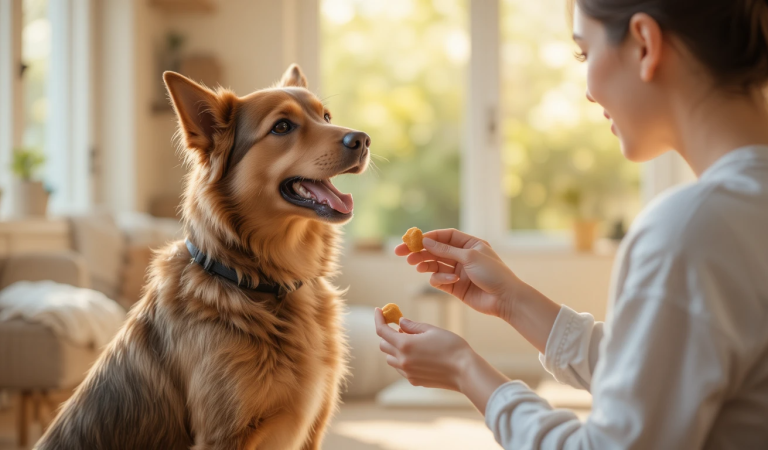
● Offer treats and calm praise during and after each trip
● Bring familiar items like a favorite toy or blanket to reduce novelty stress
3. Maintain a Consistent Routine Dogs feel more secure when their daily rhythm stays stable, even while traveling.
● Feed at the usual times
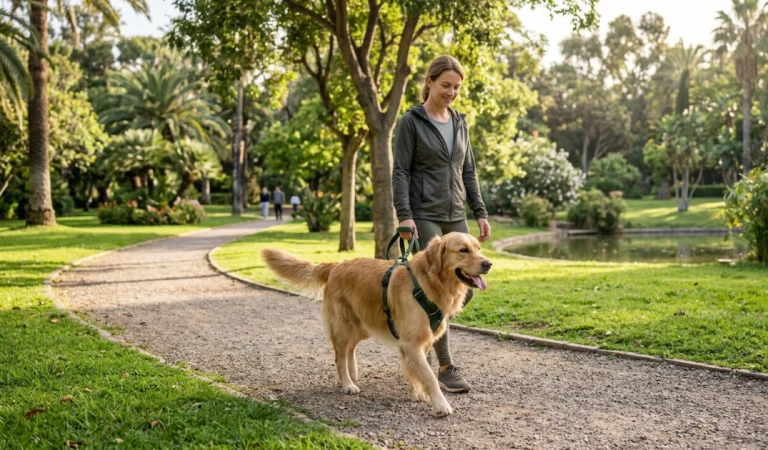
● Keep sleep and walk schedules as close to normal as possible
4. Calm Your Dog Before Travel A relaxed dog starts the trip in a better state of mind.
● Provide exercise before departure to burn off excess energy
● Avoid rushed, chaotic departures that spike stress right before the car ride
See the complete step-by-step guide to reducing travel anxiety ↴
The tools below are commonly recommended to support dogs with travel-related stress. They work best alongside training, not as a replacement for it — think of them as support, not a cure.
● Calming treats — natural, vet-formulated treats designed to ease situational stress
● Anti-anxiety collar — releases calming pheromones to help dogs relax during travel
● Calming dog bed — supports better rest and lower stress levels at home and on trips
● Interactive puzzle toys — provide mental stimulation that reduces boredom-driven stress
● Pheromone sprays or wraps — promote relaxation in the car or crate
● Lick mats and pre-travel enrichment games — help calm a dog's nervous system before departure
● Soft music or white noise — masks external sounds that might otherwise trigger anxiety
For dogs with severe or persistent travel anxiety, a certified dog trainer or veterinary behaviorist can build a tailored desensitization plan.
These products are intended to support calm behavior and are not a substitute for professional veterinary or behavioral advice. Always consult your vet before introducing new supplements, calming aids, or medication for your dog.
Preventing travel anxiety is far easier than treating it after it's set in. With the right habits and early, gradual exposure, most dogs can build genuine confidence in the car.
Start Early Exposure
● Introduce car rides from a young age when possible
● Keep early experiences short and positive
● Build familiarity gradually before attempting long trips
Keep Every Experience Positive
● Use treats and calm, quiet praise
● Avoid rushed or stressful departures
● End each trip on a positive note, even a short one
Build Confidence Gradually
● Increase trip duration step by step, not all at once
● Keep routines consistent before and after travel
● Reward calm behavior regularly
For a step-by-step approach, try this 7-day training plan.↴
Certain well-intentioned actions can actually make travel anxiety worse. Avoiding these mistakes is just as important as the positive steps above.
● Forcing your dog into the car — creates fear and reinforces negative associations
● Punishing anxious behavior — increases stress and often worsens the underlying anxiety
● Ignoring early stress signals — panting, whining, and pacing should be addressed early, not dismissed
● Starting with long trips — skipping gradual exposure usually backfires
Ease separation anxiety and keep your dog calm when alone
Is your dog restless or barking at night? Restore calm and enjoy peaceful sleep again.
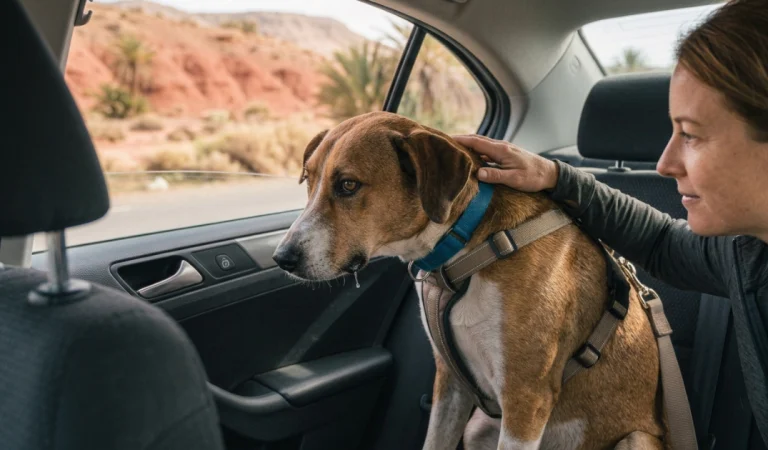
Travel Anxiety in Dogs: Causes, Signs & Effective Solutions
How to Calm a Dog During Car Rides
The Best Daily Routine For Anxious Dogs





