By Relax My Paws | Updated: September 2026 | 7 min read
Disclosure: This post may contain affiliate links. If you purchase through them, Relax My Paws may earn a commission at no extra cost to you.
Introduction
Most calming products fall into two camps: sedatives that make a dog sleepy, or vague herbal blends with little research behind them. Purina’s Calming Care tries something different — a daily probiotic built around a single, specific bacterial strain, sold through veterinary channels rather than as a generic pet-store supplement. This review looks at what the actual research says, what real owners report, and where the marketing outruns the evidence.
Product Overview
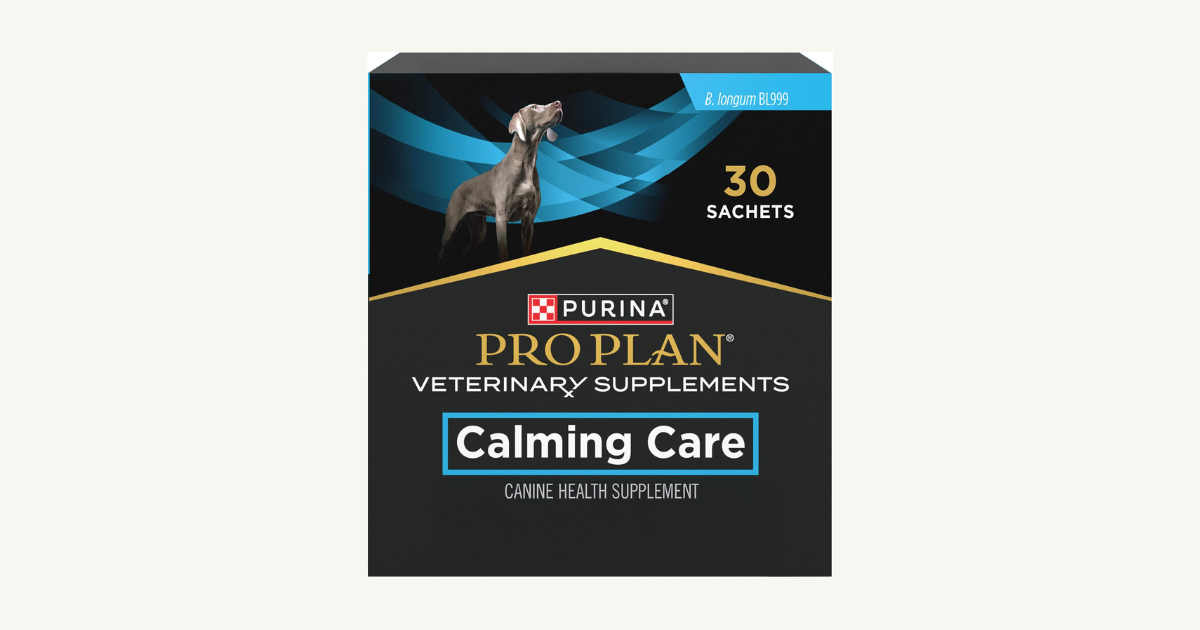
Purina Pro Plan Calming Care is a once-daily powder sachet you sprinkle over your dog’s food, containing 1×10⁹ CFU of Bifidobacterium longum strain BL999 per packet, along with liver flavoring and a maltodextrin filler. Notably, the dose is the same one packet regardless of your dog’s size — a small dog and a large dog both get the identical amount. It’s part of Purina’s “Veterinary Supplements” line, originally sold exclusively through vets when it launched in 2019, though it’s now available through retailers like Amazon, Chewy, and Petco as well. On Amazon, a 30-count box runs $33.99 (about $1.13 per packet), and the listing carries a 4.2-star average across more than 3,300 ratings — a large enough sample to be a meaningful signal, and consistent with a genuinely popular, well-reviewed product rather than a niche one.
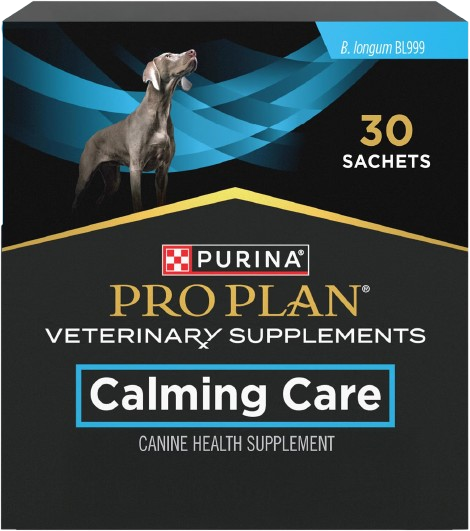
Purina Pro Plan Veterinary Supplements
A probiotic supplement designed to support dogs during common stressful situations.
How It Works
The idea is the gut-brain axis. Purina’s own research — a 15-week, placebo-controlled crossover study on 24 anxious Labradors — found 22 of 24 dogs showed significantly less barking, jumping, spinning, and pacing, and 20 of 24 had smaller cortisol spikes under stress. That’s the real data behind the “90%” figure. Per Whole Dog Journal, though, this study was never published in a peer-reviewed journal — only summaries are public, which puts it a notch below peer-reviewed evidence.
Two listing claims worth flagging: “Number 1 veterinarian-recommended” cites a “Relevation Veterinary Tracker, 2025” we couldn’t independently verify as an established source (unlike Kantar, a recognized firm Purina has cited before) — treat it as unverified marketing. And “supports positive cardiac activity” is vague packaging language for what’s really the cortisol/heart-rate data above, not a separate claim.
Do Vets Recommend Purina Pro Plan?
Worth separating two different questions here. Purina Pro Plan as a brand genuinely does carry real veterinary credibility — Purina employs staff veterinary nutritionists, and the Pro Plan Veterinary Diets/Supplements line (which Calming Care belongs to) is distributed through actual vet clinics, not just pet stores, the way many “vet recommended” pet-store brands aren’t. That reputation is earned at the brand level over decades, largely through Purina’s prescription and therapeutic diet lines.
That’s different from the specific, narrower claim on this product’s packaging — the “Relevation Veterinary Tracker” citation for Calming Care specifically. The brand-level credibility is real; the specific survey citation for this one product isn’t something we could independently confirm. Both things can be true at once: Purina Pro Plan is a brand vets genuinely work with, and this particular marketing statistic still deserves a skeptical read rather than being taken at face value.
Performance & Functionality
Aggregated reviews lean positive overall: most owners who see results report them in the four-to-eight-week range — less trembling, pacing, and barking during known triggers like storms or time alone. Mild, temporary digestive upset shows up occasionally early on, and a meaningful minority see no real change, consistent with a gut-level intervention not working the same for every dog.
One recurring, more mundane complaint: several owners independently report inconsistent powder volume between packets in the same box. Worth flagging to the retailer if you notice it, separate from whether the ingredient itself works.

Best Use Cases
Most commonly used for:
- Separation anxiety — the specific use case Purina’s own research focused on, with daily use building a baseline over weeks
- Ongoing, generalized stress — routine changes, new visitors, or a generally anxious temperament rather than one specific trigger
- Dogs with multiple, unpredictable triggers — since it works at the gut level continuously, it doesn’t require anticipating a specific event
- Alongside other tools — pairs reasonably with a pheromone diffuser or training as part of a broader daily routine, rather than replacing either
Likely to help: dogs with mild-to-moderate, ongoing anxiety where you can commit to a six-to-eight-week trial before judging results.
May need more support: dogs needing relief for a specific event happening soon (a storm tonight, a vet visit tomorrow) — this isn’t fast-acting, so a situational option is a better fit for immediate needs; also dogs with severe anxiety, which likely needs more than a daily supplement alone.
Purina Pro Plan vs Zesty Paws Calming Bites
| Criteria | Purina Calming Care | Zesty Paws Calming Bites |
|---|---|---|
| Type | Probiotic (powder/sachets) | Soft chews (treats) |
| Mechanism | Bifidobacterium longum BL999 — gut-brain axis | Melatonin, L-theanine, valerian, ashwagandha, chamomile |
| Onset of action | Slow — up to 6 weeks | Fast (~30-60 min) |
| Ideal for | Chronic/background anxiety | One-off situations (storms, car rides, vet visits) |
| Format/Duration | 30 sachets, 1/day | Based on weight, 1 to 3 chews/day |
| Advantages | Scientifically backed, no sedation | Fast-acting, combined ingredients |
| Disadvantages | Slow effect, requires consistency | Contains melatonin → watch for interactions |
Purina Pro Plan Veterinary Supplements
A probiotic supplement designed to support dogs during common stressful situations.
$34
Pros
- One of the few calming products with an actual controlled study behind the specific ingredient, not just individual components with general research
- Real, specific numbers behind the marketing claim (22/24 and 20/24 dogs, not just a vague “improves anxiety”)
- No sedation — dogs stay alert and behave normally
- Simple, low-effort daily routine — sprinkle on food once a day
- Sold through veterinary channels, which comes with a degree of oversight generic supplements don’t have
- Genuinely popular — #1 Best Seller in its Amazon category, with a large, consistent rating sample (4.2/5 from 3,300+ ratings)
Cons
- The underlying study was never published in a peer-reviewed journal, and full methodology isn’t public — a real limitation on how much weight to put on the “90%” figure
- Takes four to eight weeks to show an effect; not useful for an immediate or situational need
- Same one-packet dose regardless of dog size, which some owners find counterintuitive
- Pricier than a lot of general calming supplements
- Packet-to-packet fill inconsistency shows up often enough in reviews to be worth knowing about
- Won’t do much for severe anxiety on its own
Value for Money
At about $1.13 a day (Amazon pricing), it’s priced above most general calming chews, reflecting its more specific research backing and veterinary distribution. That’s a reasonable trade if you want a daily, ongoing supplement with more evidence behind the exact ingredient than most alternatives — but it’s a genuine six-to-eight-week commitment before you’ll know if it’s working for your dog, so budget both the time and the money before assuming it’s the right first move for acute or severe anxiety.
Final Verdict
4.3 / 5
Purina Calming Care is one of the more genuinely evidence-informed options in the calming-supplement category — real numbers, a real (if not peer-reviewed) study, and a mechanism that’s at least plausible rather than vague. It’s not fast, it’s not cheap, and the “90%” headline number deserves the context most listings leave out. For an owner willing to commit to six-plus weeks of consistent daily use as part of a broader anxiety plan, it’s a reasonable, above-average pick in a category full of thinner claims.
Sources: dvm360 — New Products from Purina and BI Target Stress in Veterinary Patients, Whole Dog Journal — Behavioral Probiotics